

Produkt · 5 min read
Video-Based Debriefing in Emergency Medical Services
Video-Based Debriefing in EMS - Inside the ASB Rhein-Main Simulation Center
Video-Based Debriefing in EMS - Inside the ASB Rhein-Main Simulation Center
A modern simulation center in Hessen demonstrates what contemporary EMS training can look like today: realistic, didactically sound, and supported by professional audio/video technology and debriefing solutions from Mangold International. The combination of authentic scenarios, structured reflection, and reliable technology makes the training effective and sustainable - and ensures that future emergency medical professionals are optimally prepared for real-life situations.
Why Simulation Is Becoming Increasingly Important in Emergency Medical Services
Training in emergency medical services is undergoing a significant transformation. Incidents are becoming more complex, communication demands are rising, and expectations regarding teamwork and decision-making skills continue to grow. At the same time, clinical training opportunities are decreasing, while rare but critical emergency scenarios are almost impossible to reproduce during real-world service.
Simulation bridges this gap - provided it is conducted professionally. For an exercise to be more than a theoretical demonstration, it requires realistic conditions and a debriefing process that makes actions and decisions clearly visible. This is where audiovisual infrastructure plays a key role.
The ASB Education Center Rhein-Main operates its simulation facility using solutions from Mangold International, seamlessly integrated into its educational concept. The technology forms the foundation for reliable, realistic training and makes learning processes objectively traceable.
The simulation center impressively demonstrates what modern EMS simulation training can look like when pedagogical expertise and professional AV technology work hand in hand.
The ASB Rhein-Main Simulation Center at a Glance
Each year, a large number of future emergency paramedics begin their training at the ASB Education Center Rhein-Main. To provide these learners with high-quality, modern training, a comprehensive simulation environment has been created that realistically replicates typical EMS deployment settings.
The facility follows a holistic concept: it is designed to enable realistic scenarios while also enhancing the quality of the debriefing process. Upcoming expansions - including an intensive care unit and an emergency department - demonstrate the ASB’s commitment to a complete, practice-oriented training approach.
Realistic Training Rooms and Scenarios
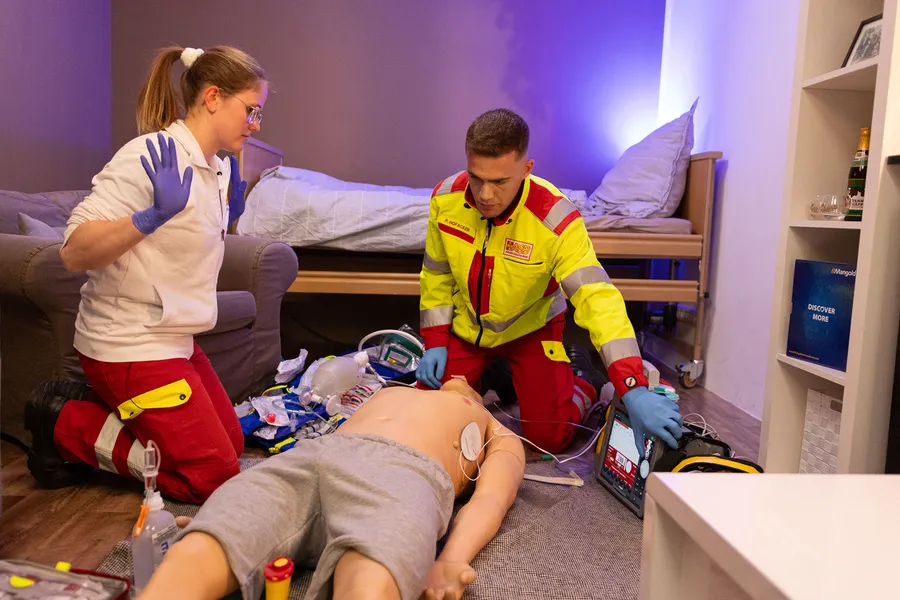
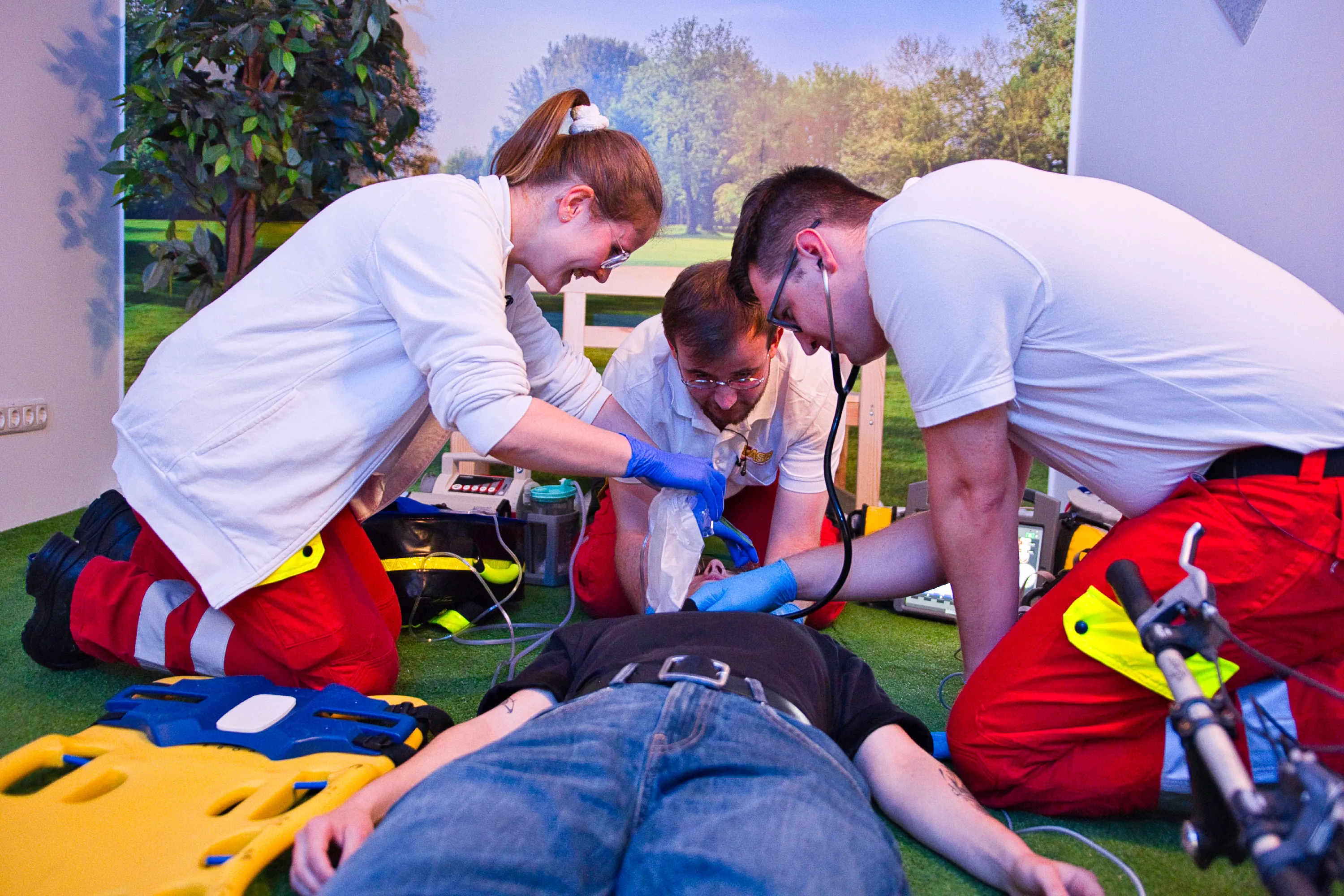
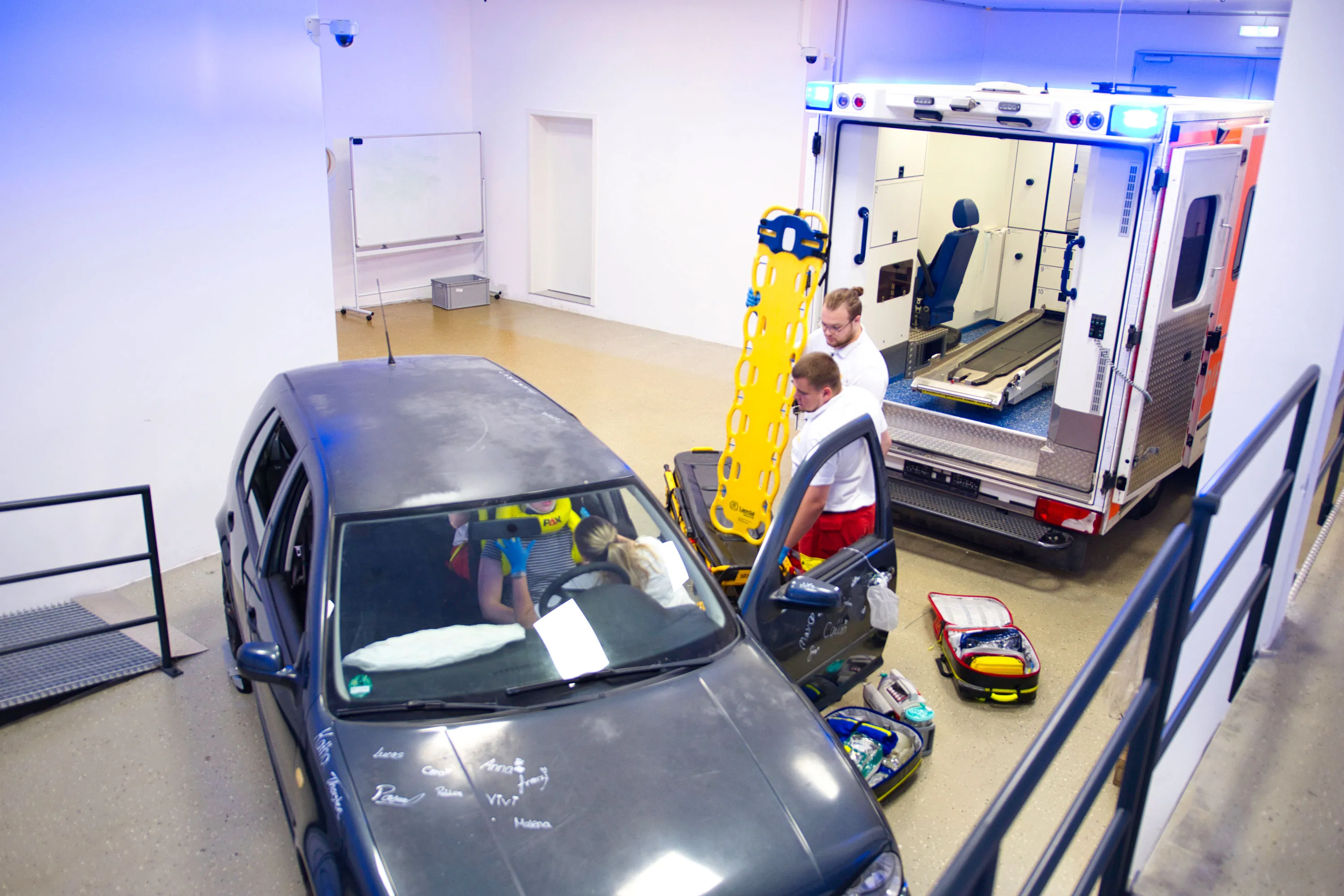
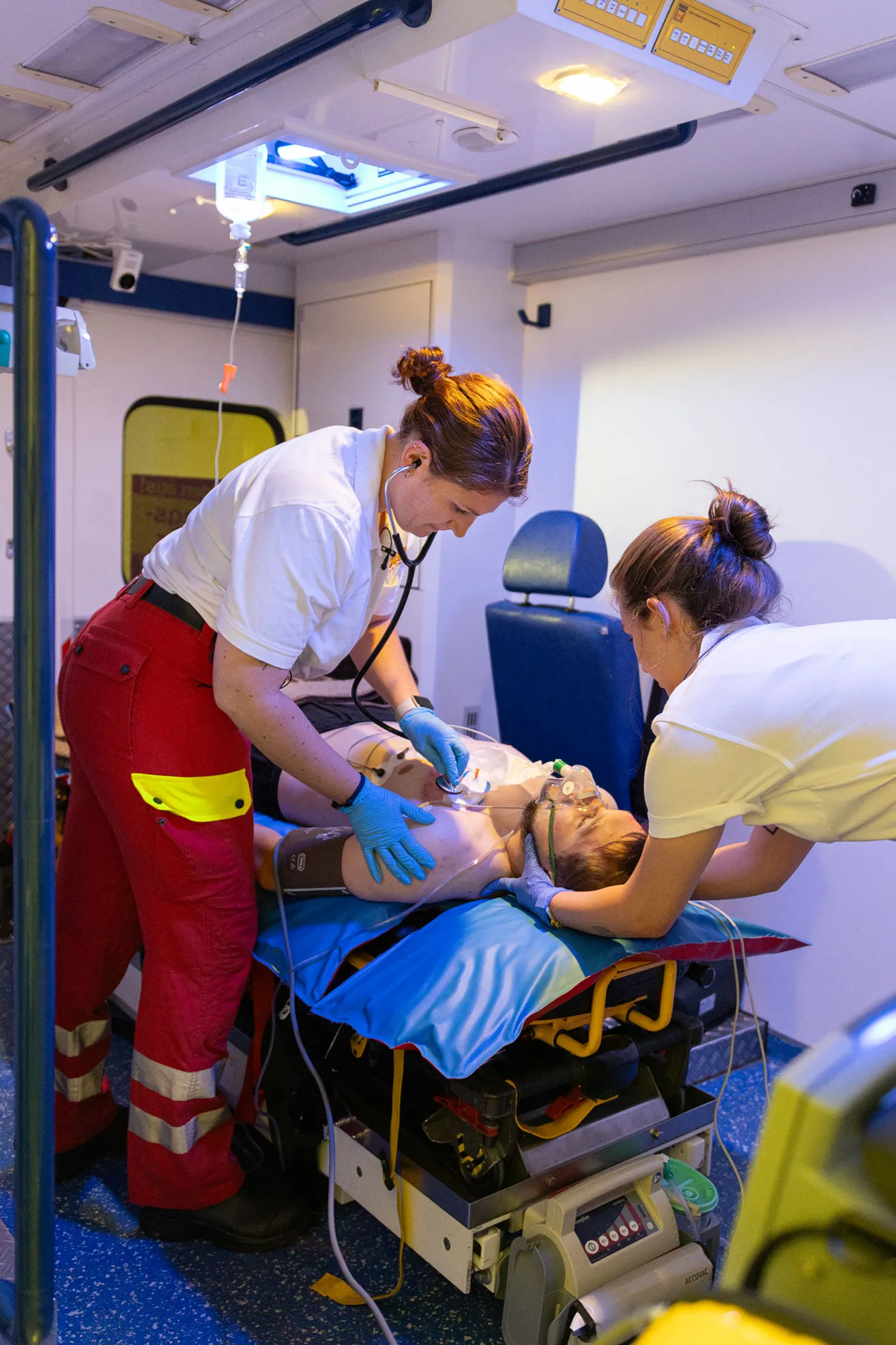
The simulation environment consists of multiple rooms that reproduce representative emergency situations. These include a living room or nursing home room, a neutral training space, an outdoor scene with artificial turf and a streetlamp, and a fully integrated ambulance.
A roughly 120-square-meter training arena further enables complex scenarios such as traffic accidents or technical rescue operations. The rooms are designed to reflect typical challenges - limited space, changing lighting conditions, or realistic ambient noise.
Professional Audio/Video Technology by Mangold
To not only conduct a scenario but also analyze it thoroughly afterward, reliable and high-quality audiovisual recordings are essential. The technical infrastructure of the simulation center has been implemented entirely with systems from Mangold International.
Several discreetly integrated cameras capture the action from multiple angles. These are complemented by precise microphone setups that ensure clear audio recording even in confined spaces. Additional audio and communication tools are available to make training more dynamic and more realistic.
Integrated loudspeaker systems (Voice/Sound-to-Room) allow instructors to give instructions directly into the training space or to introduce targeted background sounds - such as ambient noise, alarms, or other acoustic stressors - to enhance realism.
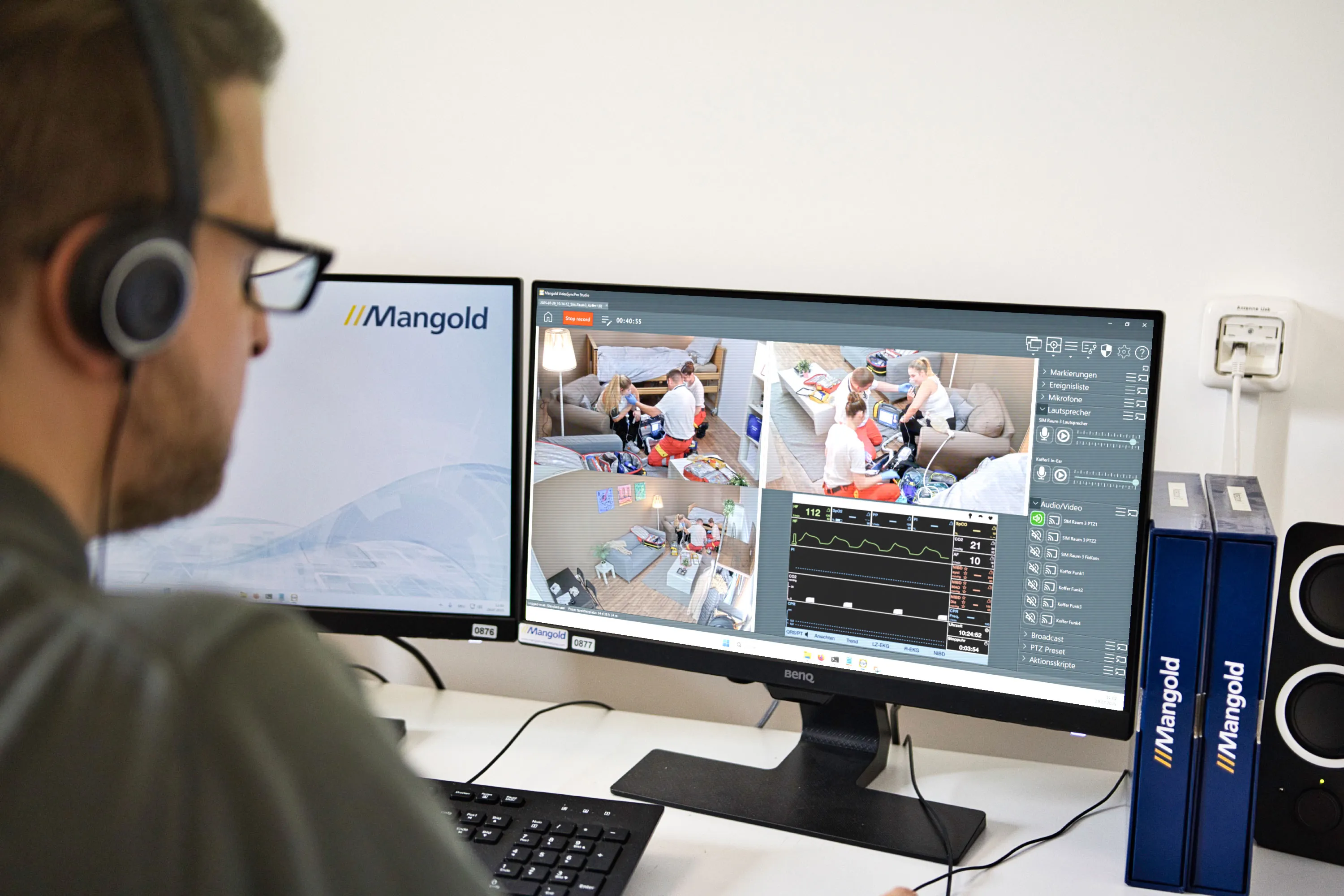
In-ear communication systems (Voice-to-Person) are available for targeted, discreet communication with individual participants. These systems allow instructors to provide specific role information or situational cues to individual participants without influencing the rest of the team.
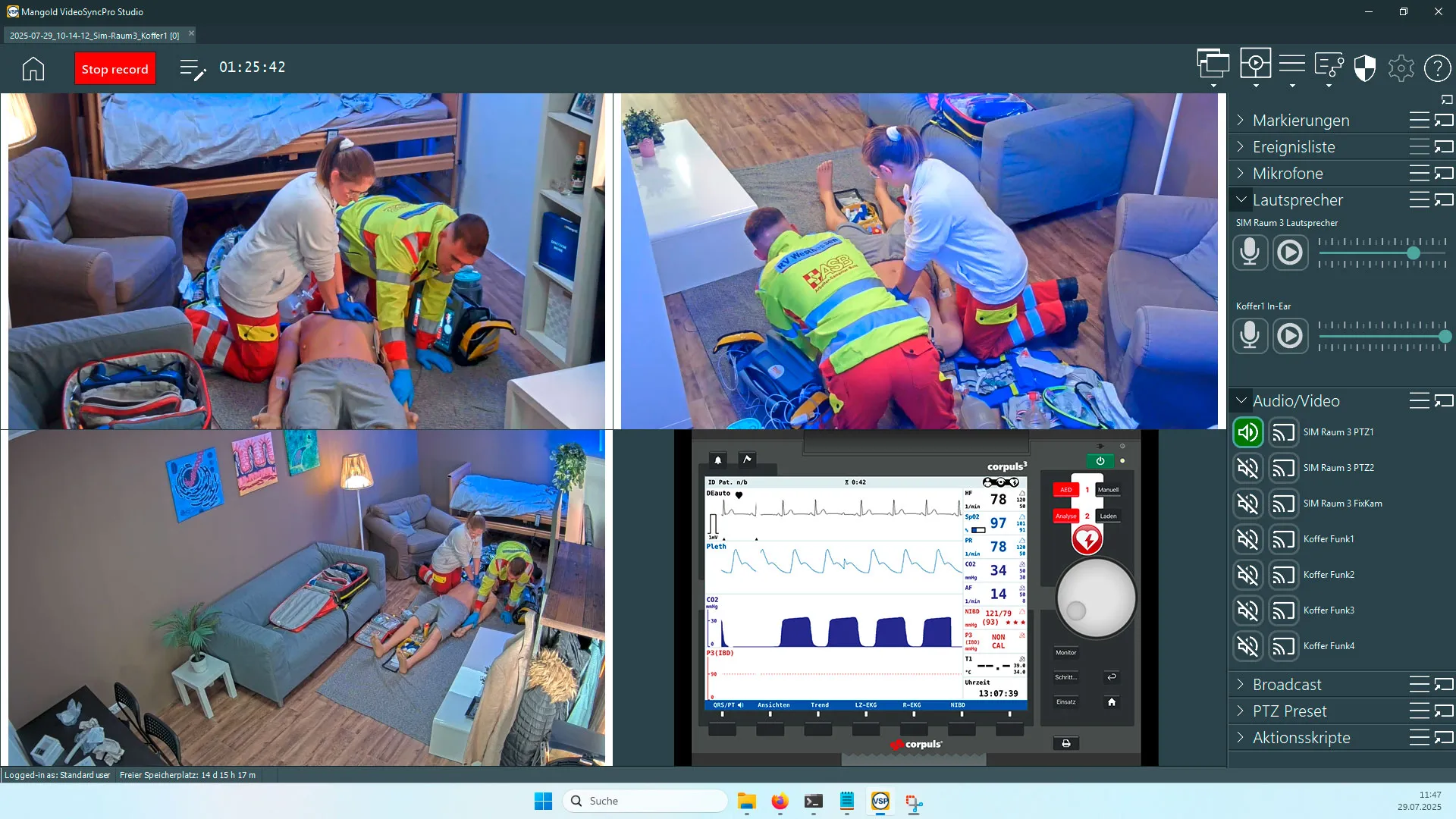
Additionally, simulated patient monitors can be fully integrated into the recording. Vital signs, ECG curves, and alarm events are captured and available for analysis during debriefing. This makes it possible to determine exactly when certain values were visible and how the team responded, which is an important advantage when evaluating medical decision-making.
All data is collected centrally and can be transmitted live to the classroom. It is then available in a structured format for debriefing.
VideoSyncPro in Action: Debriefing as a Key Driver of Learning
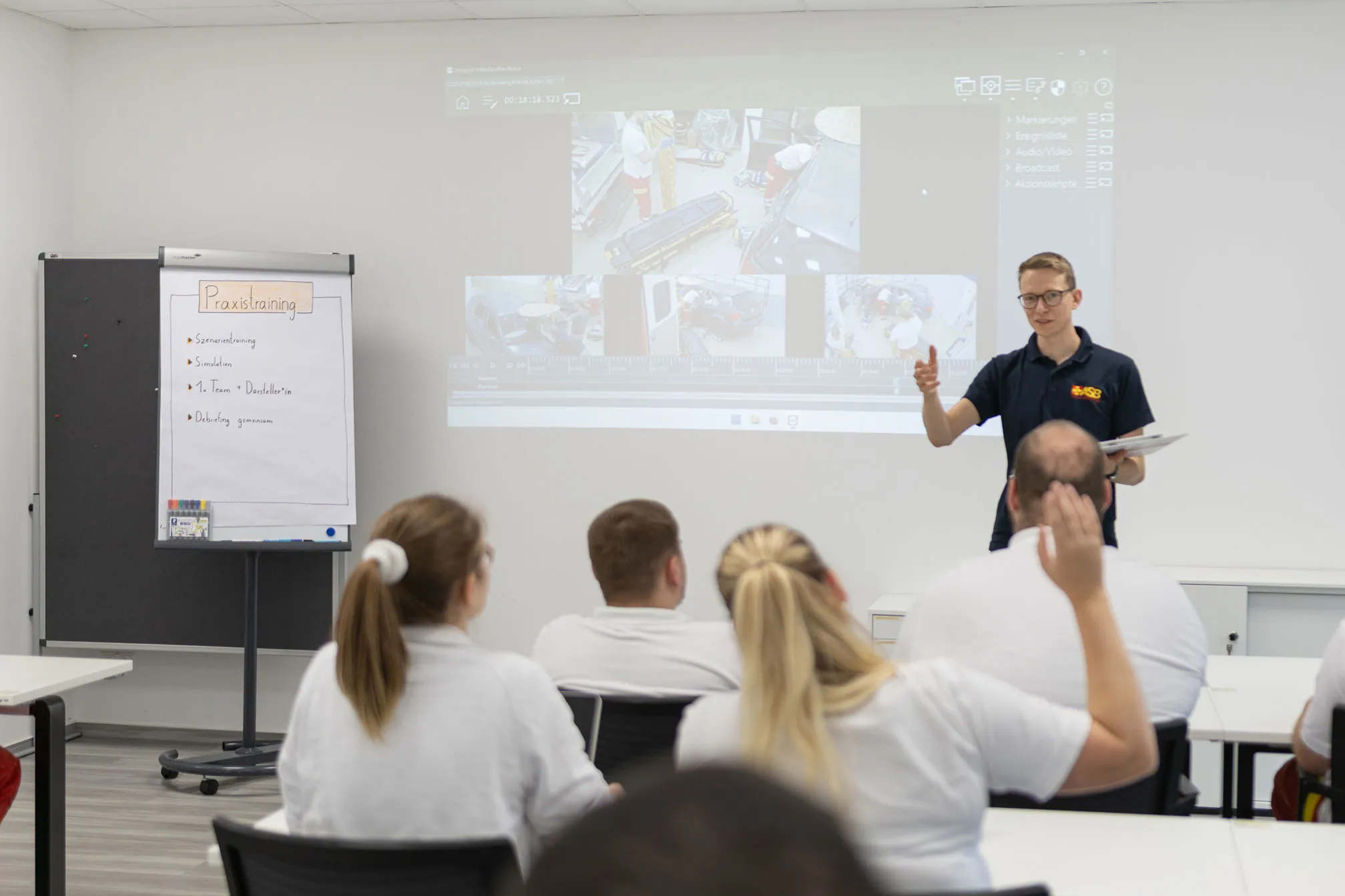
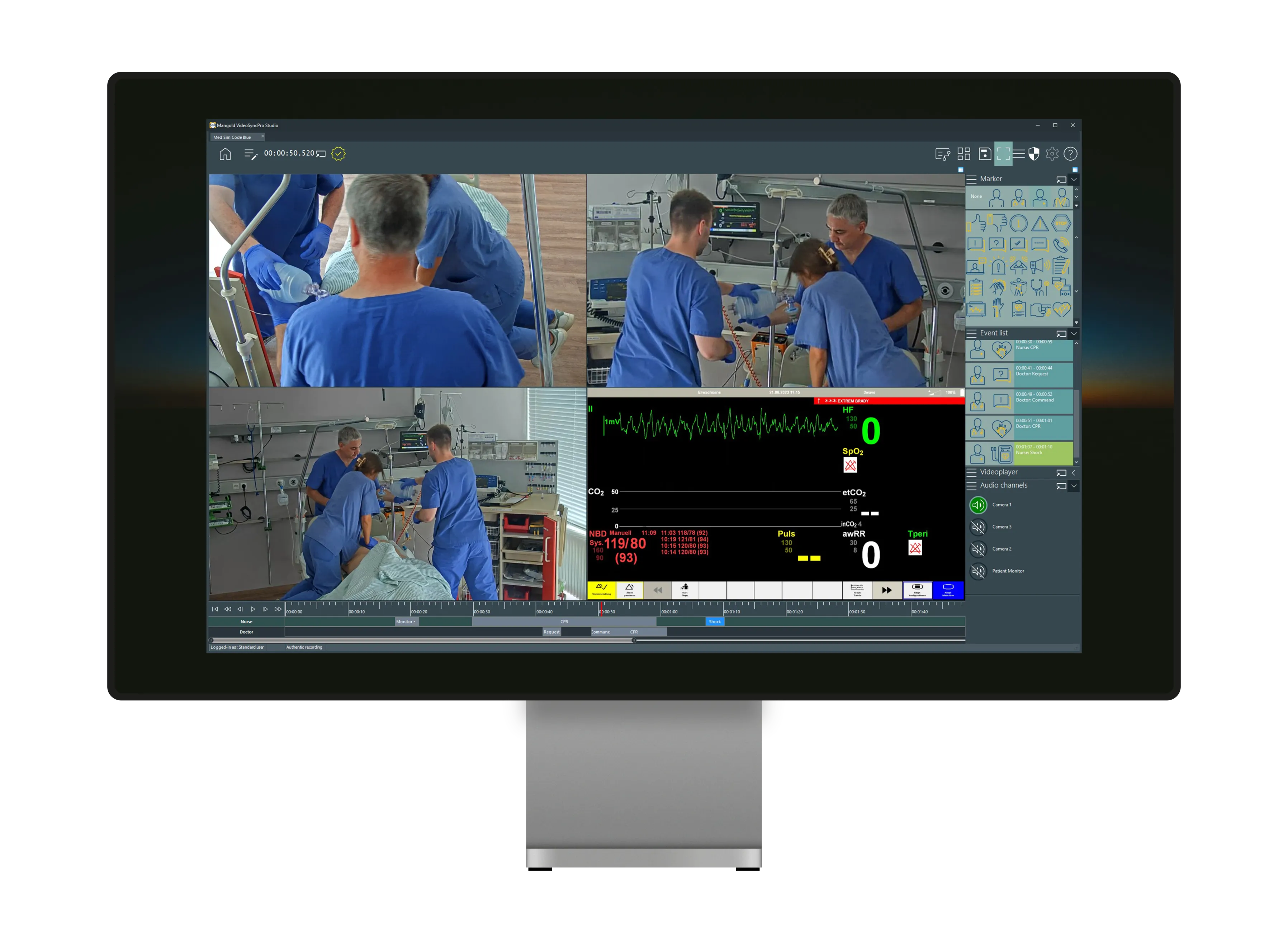
The greatest impact of simulation in emergency medical services is realized during the debriefing. With VideoSyncPro, Mangold’s professional debriefing system, scenarios can be analyzed objectively and discussed in a targeted, structured way. Instructors set time markers during the scenario to easily access relevant moments later.
By combining multiple camera perspectives, communication patterns, decision-making processes, and subtle changes in patient care become visible - details that often go unnoticed amid the stress of the scenario. Learners receive clear, comprehensible feedback on their actions.
Training Experiences from Practice
The feedback from ASB Rhein-Main is unequivocal. Learners report that the scenarios feel realistic and help them gain confidence when preparing for complex situations. The physical separation between participants and observers reduces social pressure, creating a more productive learning environment.
Instructors emphasize that, although preparation and planning require more effort, educational quality increases significantly. Decisions become more transparent, team processes become more visible, and assessments become fairer.
Lessons Learned for Institutions and Decision-Makers
The experience of ASB Rhein-Main highlights how essential a well-thought-out overall plan is for a functional simulation center. Camera placement, audio quality, lighting conditions, network architecture, and debriefing workflows must be coordinated early to ensure the system operates reliably in everyday use.
A key success factor was the close collaboration with Mangold International. We support institutions not only during installation but actively throughout the entire planning process - from camera positioning and acoustic requirements to network design and integration into the educational concept.
This results in a seamless and professional end-to-end system that operates reliably and can be easily expanded when needed.
Video Debriefing in Medical Simulation
Explore Mangolds powerful video-feedback solutions for training healthcare professionals in medical simulations.
Photos: Pascal Jackel