
Know-How · 8 min read
Video Recording in Psychotherapy: Research, Training, and Supervision in University Outpatient Clinics
How psychotherapeutic university outpatient clinics use video recording, live observation, and scientific video analysis for research, clinical training, and quality assurance - and what to look for when choosing a system.

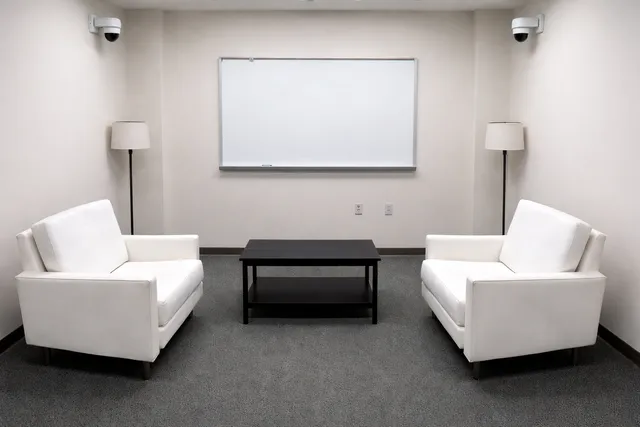
Video recording of therapy sessions is becoming increasingly important in psychotherapeutic university outpatient clinics. It supports not only research, but also the training of future psychotherapists, as well as supervision and quality assurance in everyday clinical practice. Through live observation, structured video analysis, and precise evaluation, therapeutic processes, interventions, and nonverbal communication can be documented and examined systematically. At the same time, data protection, technical reliability, and thoughtful integration into existing clinical workflows are essential. Exploring therapy session recording in university clinics offers valuable insight into modern approaches to psychotherapy research, clinical education, and professional quality assurance.
Video recordings of therapy sessions have become one of the most powerful tools available to psychotherapeutic university outpatient clinics. They enable objective therapy research, accelerate the training of future psychotherapists, and make supervision more precise and effective. At the same time, they place high demands on technology, data protection, and thoughtful integration into clinical workflows.
This article provides a structured overview: why video recording in psychotherapy is no longer optional, what a professional integrated system needs to deliver - and what role scientific video analysis plays in the process.
The University Outpatient Clinic: Four Missions, One System
Under German law (§ 117 SGB V), psychotherapeutic university outpatient clinics simultaneously fulfill four core missions: patient care, research, teaching, and knowledge transfer. In practice, these functions are tightly interwoven - and this is precisely where a professional video recording system delivers its greatest value.
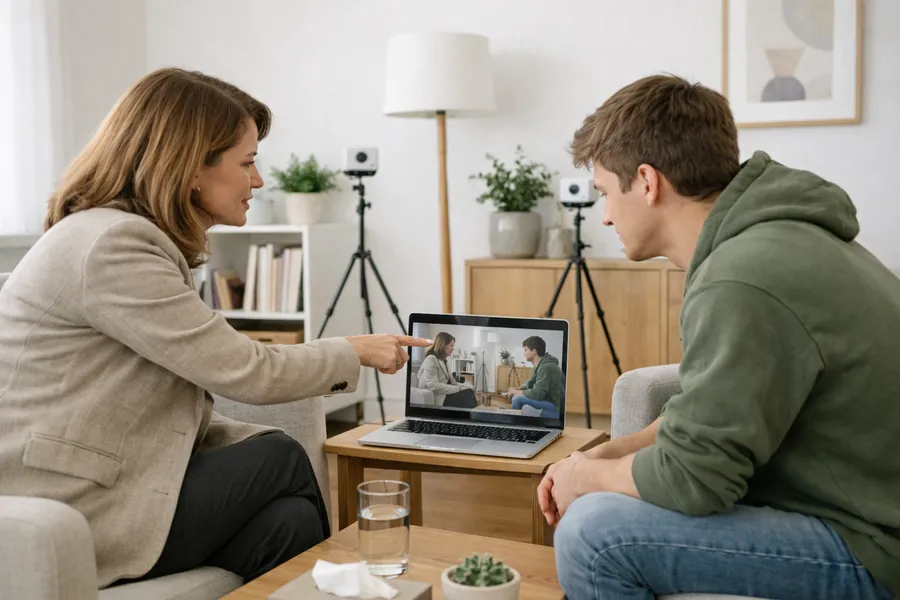
A well-designed AV system connects all four areas:
- Patient care: Recordings provide a solid basis for internal quality assurance and can be used directly as a therapeutic technique - for example, to jointly analyze role plays or help clients reflect on their own behavior.
- Research: Recorded sessions enable systematic analysis of therapeutic processes - from therapy adherence and therapeutic alliance to nonverbal communication dynamics.
- Teaching: Students observe via live feed, reflect on session clips in seminars, and practice reviewing their own recordings - all integrated directly into the curriculum.
- Knowledge transfer: Video sequences serve as stimulus material in focus groups, training programs, and publications - subject to strict compliance with data protection requirements.
Video Recording in Psychotherapy Research
The scientific use of therapy videos has grown substantially in recent years. In clinical research in particular, video recordings open up analytical dimensions that go far beyond self-reports and questionnaires.

Therapy Adherence and Intervention Quality
One central application is the verification of therapy adherence: Was the treatment manual actually followed? Which interventions were used, at what frequency, and with what quality? Standardized video analyses allow these questions to be answered objectively and reliably - significantly strengthening the internal validity of clinical trials.
Research groups at university hospitals are growing internationally, focusing, for example, on nonverbal communication as a transdiagnostic factor or using naturalistic observation of social interaction in couples and family therapy. As a result, video-based behavioral observation is increasingly becoming a methodological standard in clinical psychology.
Therapeutic Alliance and Nonverbal Communication
The therapeutic relationship is one of the most robust predictors of therapy outcomes. Video analysis makes it possible to systematically capture prosodic patterns, body language, eye contact, and interactional synchrony in therapist-client dyads - dimensions that are nearly impossible to describe verbally.
Note
For research groups working with approaches such as Mentalization-Based Treatment (MBT), video analysis of interpersonal processes is methodologically indispensable: mentalization unfolds in subtle nonverbal micro-signals that can only be captured through frame-accurate coding.
Qualitative Research Designs
Beyond quantitative analysis, video recordings open up new possibilities for qualitative research: clips from therapy sessions can be used as stimulus material in semi-structured interviews or focus groups. This allows the subjective perceptions and decision-making processes of therapists to be explored in depth - a methodological approach increasingly used in multicenter projects funded by the German Research Foundation (DFG) and the Federal Ministry of Education and Research (BMBF).
Video-Based Training: From Live Observation to Independent Analysis
The reformed Psychotherapy Act in Germany has significantly raised the standards for clinical-practical training. Practice-oriented components, supervision, and the close integration of theory and clinical application are now mandatory. Video recordings are not an optional add-on in this context - they are a didactically indispensable tool.
Live Observation in the Seminar Room
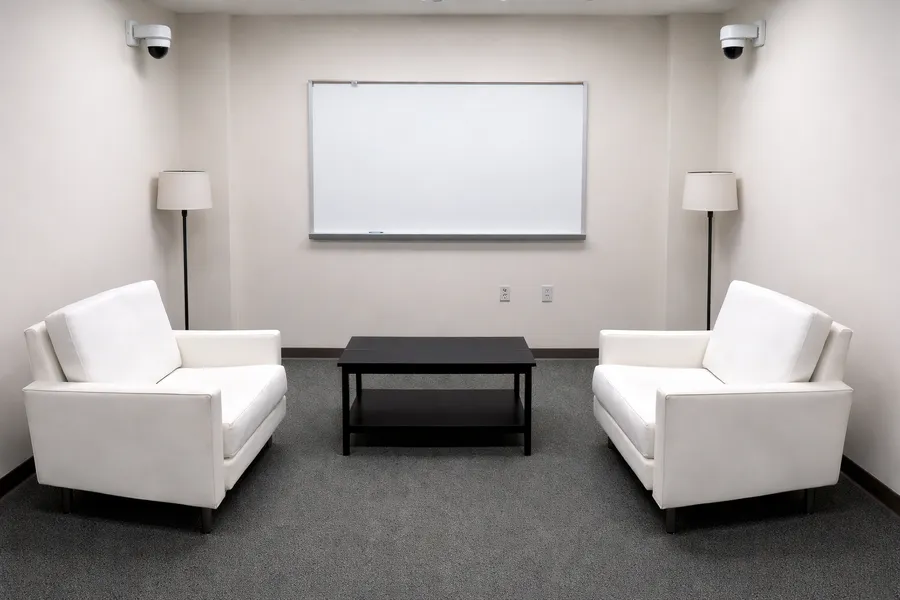
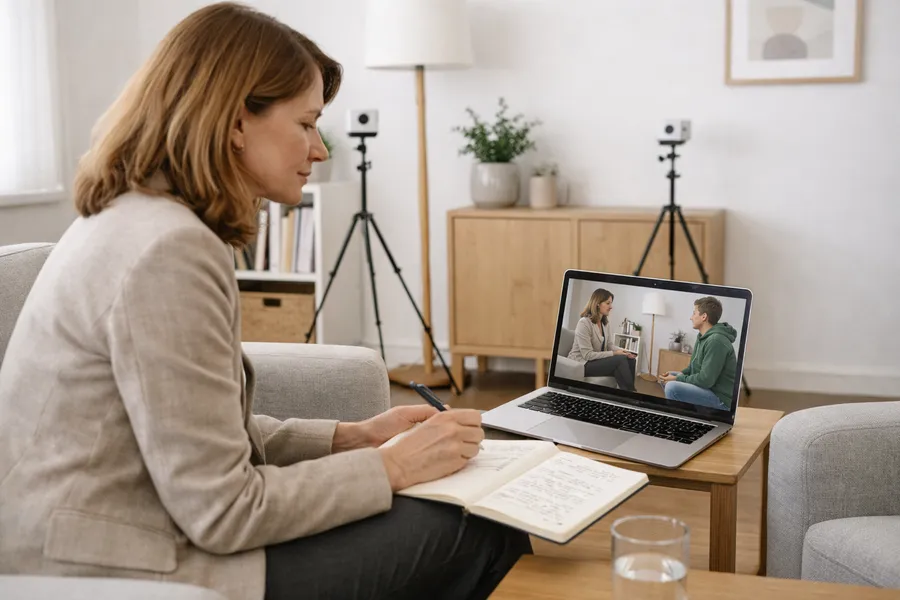
The classic scenario: a therapy session takes place in the therapy room while students and supervisors follow it in real time from a separate seminar room PC. The live observation software streams the video signal - synchronized, high-resolution, and over a shielded network - enabling simultaneous discussion without any disruption to the therapeutic process.
The network architecture is critical here: audio and video streams are transmitted over a separate VLAN, fully isolated from the general institutional network. This prevents network activity within the university environment from affecting transmission quality and ensures full compliance with all data protection and privacy requirements.
Recording and Reflection
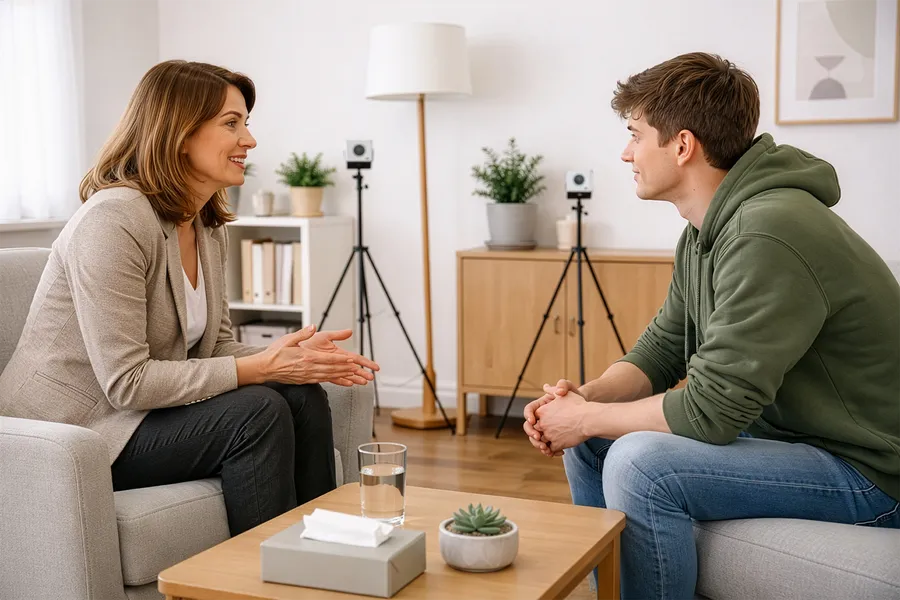
Beyond live observation, recording sessions for subsequent reflection is essential. Students can analyze their own therapy sessions in detail: What was my style of communication? When did I choose which intervention? How did my client respond nonverbally?
Supervisors place markers during playback to flag relevant sequences - and can jump to any marked moment with a single click. The annotation system allows multi-line comments directly on the timeline, which can then be exported as a PDF report.
Seamless Integration into the Curriculum
A professional system is designed to be operated without specialist technical knowledge. Therapists start recordings with a single button press; PTZ cameras automatically move to predefined positions. This minimizes operational overhead and ensures the system is actually used day to day.
Scientific Video Analysis: From Recording to Insight
Recording is the first step. The scientific value comes from systematic coding and analysis of the video data. This is where specialized video coding software comes into play.
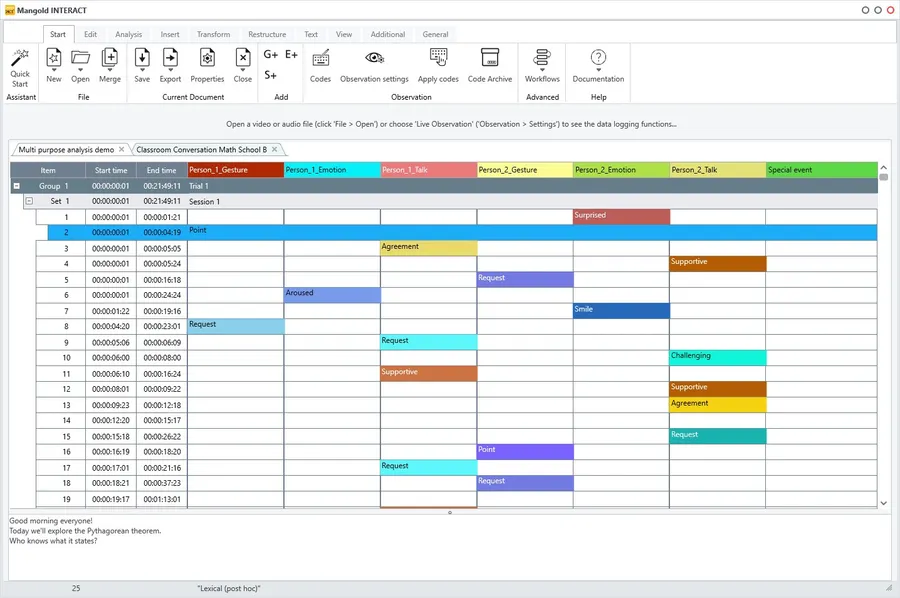
Mangold INTERACT: One Software for Your Entire Observational Research Workflow
From audio/video-based content-coding and transcription to analysis - Mangold INTERACT has you covered.
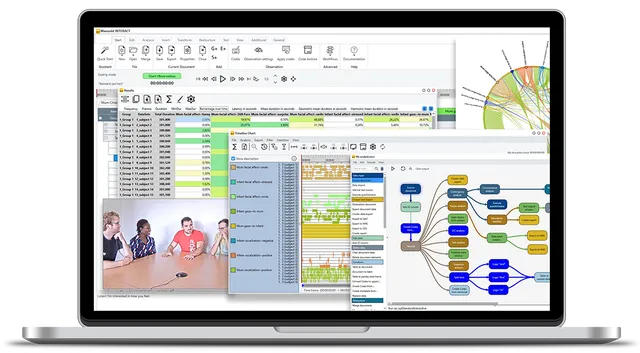
Event and Time Sampling
Clinical studies typically combine two fundamental methodological approaches:
- Event sampling: Relevant events - a protocol deviation, a specific client behavior, a nonverbal signal - are captured with frame-accurate precision as they occur.
- Time sampling: At regular time intervals, the coder records which behaviors or states are currently present.
Both methods can be combined within a single study and applied to multiple video and audio files simultaneously.
Inter-Rater Reliability
For data to be scientifically usable, inter-rater reliability is essential. Established metrics such as Cohen’s Kappa and ICC (Intraclass Correlation Coefficient) can be calculated directly within the coding software. Built-in visualizations make the interpretation of agreement considerably easier.
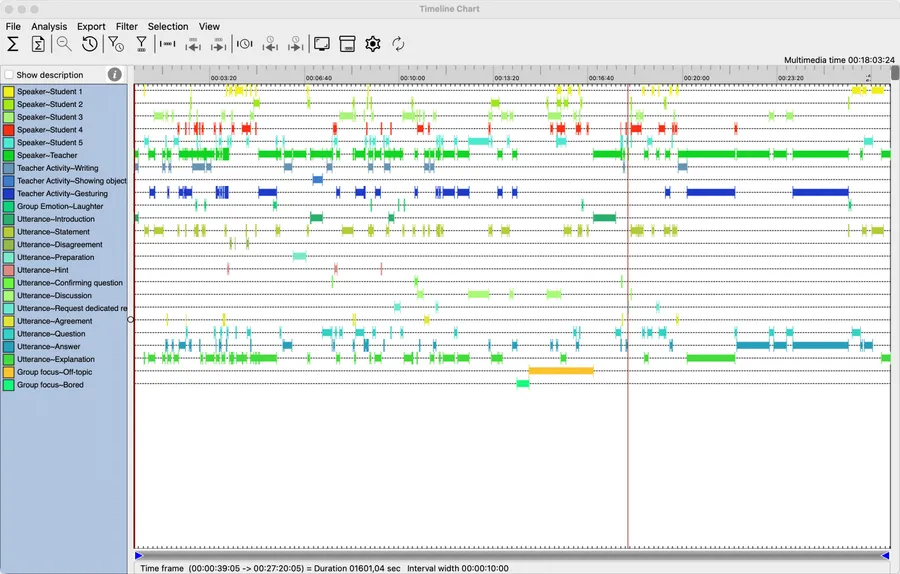
Sequence Analysis and State-Space Grid
For the analysis of interpersonal dynamics in therapy dyads, advanced statistical tools are available in the Mangold INTERACT software:
- Lag-sequential analysis to calculate transition probabilities between coding states - for example: how often does a therapist’s empathic statement lead to client disclosure in the following turn?
- State-Space Grid for visual representation and analysis of dyadic interactions - particularly relevant for couple and family therapy research.
AI-Based Auto-Transcription
A growing application area is the automatic transcription of session recordings. An integrated AI module enables offline auto-transcription directly within the Mangold INTERACT analysis software - without audio data leaving the local system. For university clinics working with sensitive patient data, this data protection aspect is critical.
What a Professional System Must Deliver
The requirements for a video recording system in a university outpatient clinic are substantially more demanding than for a private practice. The following are critical for reliable ongoing operation:
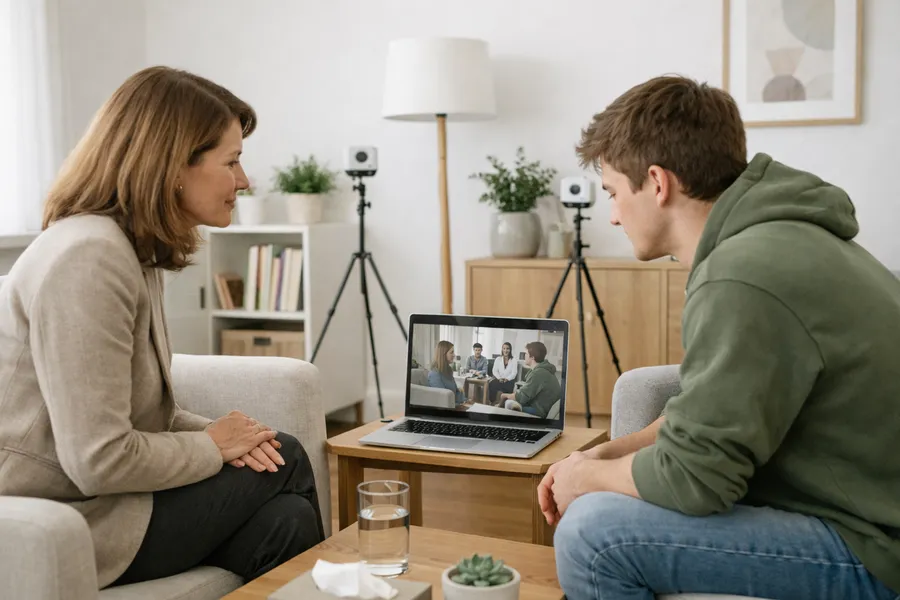
Hardware: PTZ Cameras and Professional Microphones
PTZ cameras (pan-tilt-zoom) are the standard for therapy rooms: they allow flexible positioning, can be remotely controlled via software, and move to predefined presets with a single command. Group therapy rooms with multiple participants require different configurations than individual therapy rooms.
Professional cardioid or boundary microphones (frequency range 40-20,000 Hz) ensure clear, noise-free voice recording suitable for transcription and coding. All audio signals are embedded lip-synchronously into the video stream - without any separate conversion after recording.
Software: Everything from One Provider
A core procurement principle for university outpatient clinics is system coherence: software and hardware must come from the same provider to ensure long-term compatibility, unified trainability, and seamless support. Three software components are essential:
- Recording, control, and feedback software with a marker system, annotation tools, highlight video export, and a report generator
- Live observation software for the seminar room PC, with automatic detection of available observation devices
- Scientific video coding software with event and time sampling, reliability analyses, and export functions for statistical analysis
Data Protection and Compliance
Sensitive therapy data requires a carefully designed security concept:
- Role-based access control: Differentiated permissions for students, therapists, supervisors, and administrators
- Secure deletion: Up to 7-pass overwriting of data on the hard drive - configurable according to the institution’s data protection policies
- Active Directory integration: Seamless integration into the existing university IT infrastructure
- Metadata management: Recordings can be enriched with any metadata required for archiving and data protection compliance
Lifetime Licensing
For publicly funded institutions and private practices, annual licensing fees are often a challenge. Mangold systems therefore typically come with perpetual licenses with no recurring annual costs - including software updates and support for a defined period.
Implementation: Planning Is Everything
Installing a multi-room system in a university outpatient clinic is a project that requires far more than mounting cameras. The critical factors are:
- Efficient cabling and installation planning for all therapy rooms and the seminar room
- Smart network architecture with a separate VLAN for AV data
- Carefully planned camera positioning tailored to room size and use type (individual therapy, group therapy, child and adolescent therapy)
- On-site staff training after installation
- Online training sessions on video coding for research staff
An experienced system provider supports not just the installation but the entire project: from the initial needs assessment and tender preparation to onboarding and ongoing support.
Planning Your Therapy Room System
Talk to an expert and receive a tailored quote including a cabling and installation plan for your university outpatient clinic.