

Remote Testimony · Supports the Méndez Principles · Made in Germany
Audio-Visual Recording for Courtrooms
- Remote Witness Testimony
- Supports the Méndez Principles
- Made in Germany
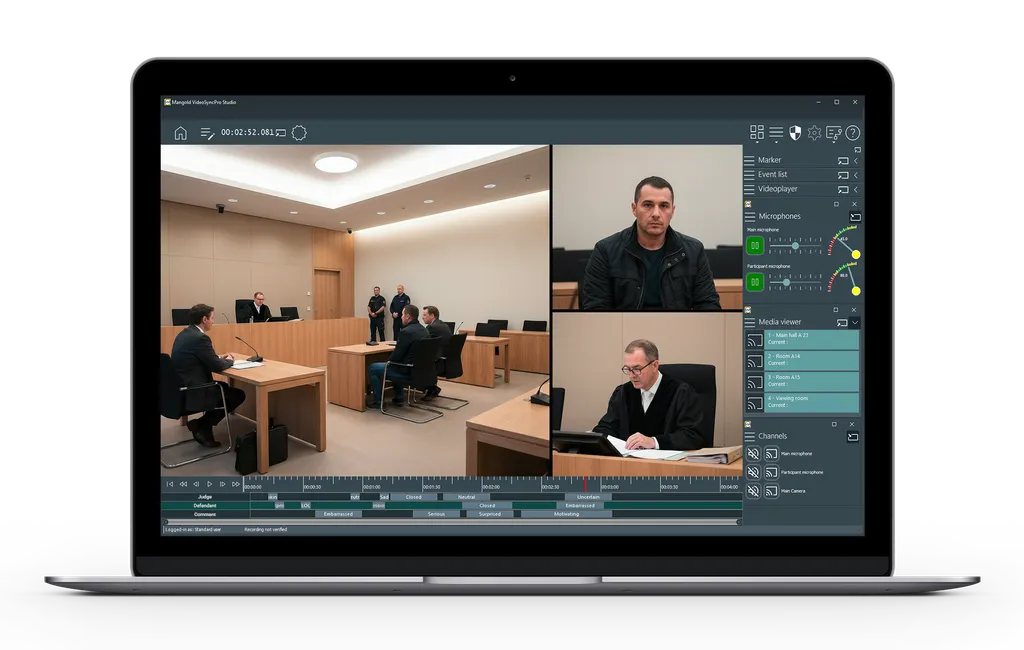
Every Repeat Examination Burdens Witnesses and Delays Proceedings
Standard video conferencing solutions quickly reach their limits in courtroom environments.
Victim Protection Through Separate Questioning
Victims and vulnerable witnesses give evidence from a protected room without facing the accused in court. Clear transmission lets the court perceive facial expressions, gestures and conversational dynamics.
Technical Stability
Hearings and trials must not fail because of unstable connections or poor audio quality. Unreliable technology leads to delays, adjournments and additional organisational effort.
Traceable Documentation
Audio-visual recordings in court must be traceable and processed in line with data protection law. Integrity checks, secure storage and logged access are core requirements.
You Run the Proceedings. We Provide the Technology.
Recordings with integrity verification that the court can review at any time.
Separate questioning and protected testimony environments for sensitive proceedings.
Fewer interruptions, faster scheduling, less travel.
Stable transmission and documentation from multiple perspectives.
Secure storage, role-based access, GDPR-compliant processing.
Stationary and mobile solutions for different court locations.
How to get your system
Three Steps to Protected Remote Testimony
- 1
Clarify requirements
We discuss courtrooms, interview rooms, transmission paths and the requirements of your judicial IT with you.
- 2
Install the system
Mangold International plans and installs the stationary or mobile system and adapts it to your rooms.
- 3
Hear evidence securely
Mangold International introduces your users to the system, with minimal training. Hearings run reliably and are fully documented.
System Variants for Courts and the Judiciary
From permanently installed courtroom systems to mobile solutions for flexible deployment.
Stationary Courtroom Systems
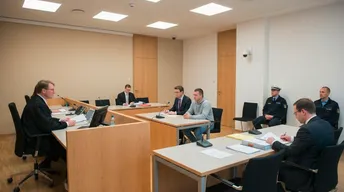
Central Control
Central control in the courtroom, transmission to adjoining rooms or public galleries, parallel recording and streaming.
Integration with Court IT
Connection to existing judicial IT and documentation processes is possible.
Open Justice
Controlled transmission to public viewing rooms to uphold the principle of open court proceedings.
Mobile Court Solutions
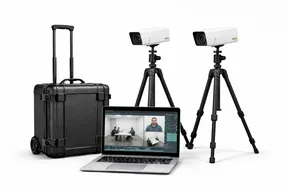

Quick Setup
For changing rooms, remote chambers or special hearings, ready in just a few minutes.
No Fixed Infrastructure Required
Self-contained operation, even where no fixed technical infrastructure is available.
Multiple Locations
One mobile system can serve multiple locations and remote chambers as needed.
Complete Documentation of Every Examination
A professional AV system captures court examinations completely and documents them in a structured way, with synchronised sources, timestamps, markers and integrity verification.
Synchronised Multi-Source Recording
Multiple cameras and audio sources are recorded synchronously for seamless documentation of every hearing.
Timestamps and Markers
Important moments can be marked live and timestamped for quick navigation in the recording.
Tamper-Evident Storage
Checksums, watermarks and audit trails secure the integrity of every recording. Any alteration is detected.
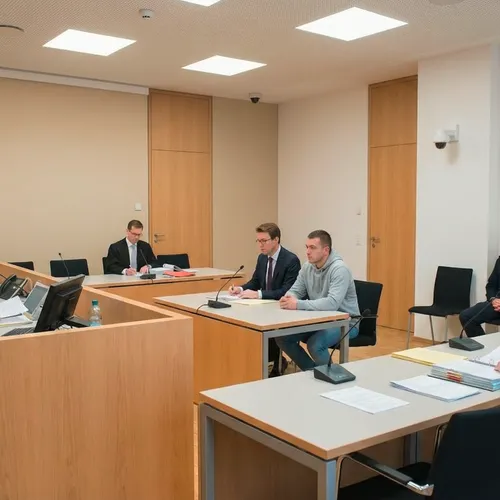
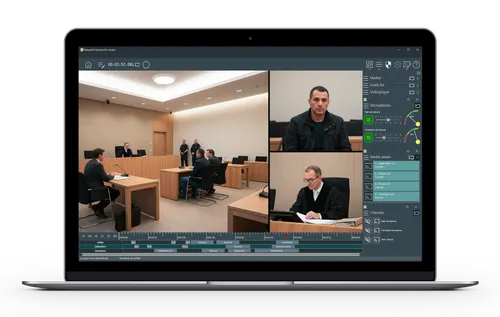
Mangold VideoSyncPro Software
Synchronised recording, live streaming and procedural documentation for courts.
Synchronised Recording
Recording of multiple synchronised sources with timestamps and markers in one interface.
Live Streaming to Multiple Rooms
Parallel streaming to public galleries, adjacent rooms or remote participants.
Watermarks and Information Overlays
Automatic display of case number, date and time in every image, so each sequence can be clearly attributed.
Role-Based Access Rights
Different user groups receive exactly the rights they need for their tasks.
What You Can Rely On
AV systems for courts must be procedurally sound. These commitments apply to every installation.
AES-256 Encryption
AES-256 encryption in line with methods recommended by the German Federal Office for Information Security (BSI).
Automated Integrity Verification
Every recording is automatically checked for integrity. Any alteration is detected.
Tamper-Evident Storage
Recordings are stored and archived in a tamper-evident manner.
Audit Logs and Access Documentation
Every access to recordings is logged and documented traceably.
Role-Based Access Control
Only authorised persons have access to sensitive hearing and trial recordings.
GDPR-Compliant Processing
Secure storage and defined deletion processes in accordance with GDPR and data protection law.
Who Is the Solution For?
More efficient scheduling, shorter proceedings, better room utilisation and complete documentation for complex cases.
Secure preservation of evidence from sensitive witnesses, reduced risk of losing testimony, reliable documentation for case management.
Transparent documentation of interviews and procedural steps, support for evaluating evidence and for appeal-relevant review.
Less burden through separate questioning, flexible participation, protected testimony environment.
Central management of multiple systems and locations, standardised processes, scalable implementation.
Legal Framework for Video Hearings in Court
Example: key provisions for audio-visual recordings under German law.
§ 247a StPO
Remote examination during trial: allows a witness to be examined outside the courtroom by video link.
§ 168e StPO
Separate questioning in a protective situation: allows evidence to be given in a protected environment without confrontation.
§ 255a StPO
Playback of recorded examinations at trial as evidence, instead of a repeat examination.
§ 58a StPO
Audio-visual recording during the investigation: basis for interview recordings used in court.
§ 128a ZPO
Video hearings in civil proceedings: allows oral hearings by video conference.
The Méndez Principles in Court Proceedings
The Méndez Principles describe questioning without coercion, built on rapport and traceable documentation. The Mangold system supports the implementation of the Méndez Principles by capturing evidence given from a protected room completely in sound and vision. Vulnerable people give evidence without confrontation, and the court can review every examination afterwards.
Spare Witnesses a Repeat Examination
Mangold International delivers AV recording systems for courts, prosecution services and judicial authorities. Talk to us about your project.
Frequently Asked Questions
Which legal provisions govern courtroom AV recording?
This depends on the jurisdiction. In Germany, for example, Sections 247a, 168e, 255a and 58a of the German Code of Criminal Procedure (StPO) and Section 128a of the German Code of Civil Procedure (ZPO) govern remote examination, separate questioning, playback of recorded evidence and video hearings. Mangold International designs each system around the requirements of your court.
How is recording integrity ensured?
Every recording is assigned a checksum and can be encrypted with AES-256. Case number, date and time stamp are embedded as a live overlay in each camera image. An automated integrity check during playback detects any alteration. The recording is therefore designed for use as evidence in court.
Can multiple cameras be deployed in a courtroom?
Yes. The Mangold system supports multi-camera recording with individual PTZ control, for example for witnesses, the bench, the defence and the prosecution. Camera switching can automatically focus on the person currently speaking.
How does remote witness testimony work?
For remote testimony, the witness is questioned in a protected room while judges, defence and prosecution follow the proceedings in another room. The Mangold system transmits sound and vision without dropouts and records both rooms synchronously, with Voice-of-God communication for judicial directions.
Which judicial requirements does the system support?
The Mangold system uses encryption in line with BSI-recommended methods, detects any alteration of recordings through checksums and supports chain-of-custody documentation. Role-based access rights and audit logs are standard.
Can the system support online or remote hearings?
Yes. The system supports online hearings with professional AV quality in both directions: participants in the courtroom see and hear remote attendees and vice versa. Redundant recording ensures that no hearing remains undocumented.
What evidence packages can be exported?
The system exports standard video formats for broad judicial compatibility, encrypted judicial packages for secure transfer between agencies, and redacted versions with watermarks for case file inspection. Automated PDF reports including metadata and proceeding markers are also available.
Does the system support the Méndez Principles?
The Mangold system supports the implementation of the Méndez Principles. Evidence given from a protected room is documented completely and synchronously in sound and vision, so every examination remains traceable for the court and all parties.