

Reality-Based Training · Multi-Camera AAR · Made in Germany
Video Debriefing for Reality-Based Police Training
- Reality-Based Training
- Multi-Camera AAR
- Government-Grade
- Made in Germany
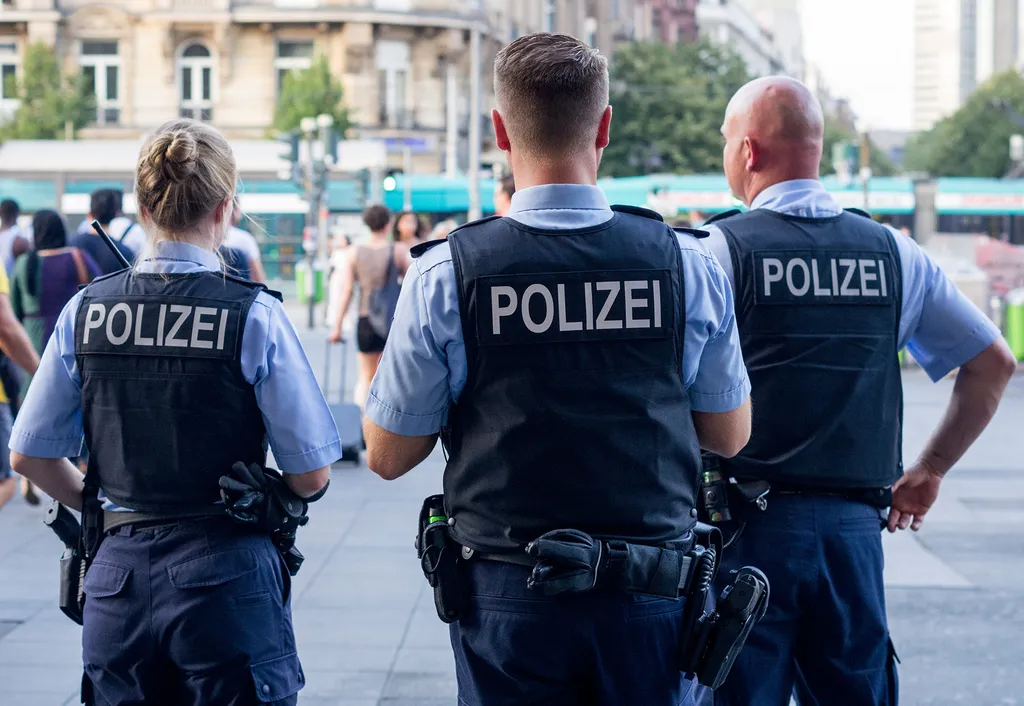
After the Scenario
Under Stress, Everyone Remembers Differently.
A vehicle stop in scenario training, and the situation turns: at what point in the conversation did things change? What was said or done immediately before, and by whom? In the debriefing, those involved describe the sequence differently, and each account makes sense from their own perspective.
Under stress, memory is selective. If the debriefing relies on accounts alone, the discussion turns to assumptions rather than actions, and how much the unit takes away depends on who is running the training.
In police operational training, the worry about being judged on camera is particularly strong. As soon as a recording is involved, the question arises of who will see it and what it will be used for. And where technology is already in place, it is often seen as rigid and costly to extend.
What Is at Stake in Police Operational Training
The debriefing determines how much of a training session officers take back into service.
Without a recording, the debriefing relies on the memories of those involved. Under stress, these are selective and shaped by self-protection, and mistakes are easily rationalised without anyone noticing.
Whatever the officer did not perceive in the moment of stress remains undetected without a recording and is therefore not corrected.
Armed attacks, hostage taking, major incidents: situations that rarely occur in service but require thorough preparation.
Every measure is considered from legal, factual and procedural perspectives. Awareness of the limits of state authority has to be internalised.
A debriefing shouldn’t depend on who remembers what. Learning in operational training should be based on what actually happened, not on different memories of it.
Your Partner for the Technology in Operational Training
You’re the Experts on Your Operational Training. We Make Sure the Technology Keeps Up.
Police trainers know how to run a good debriefing. We know which technology you need, when and for what: multiple cameras for confusing situations, mobile systems for the training ground and data storage that stays entirely within your organisation.
35+ Years of Experience
Since 1991, Mangold International has developed software, video technology and systems for training, research and public authorities, with customers in more than 50 countries.
Direct From the Manufacturer
Development, manufacturing and support from Germany. No reseller between your force and the people who develop the system.
Manufacturer-Neutral
Existing cameras, microphones and devices can be integrated regardless of manufacturer.
From Consultation to Onboarding
Planning, installation and onboarding for your trainers come from a single source.
Three Steps
How Your Unit Gets to Video Debriefing
- 1
Define Training Sites and Workflow
Together we define training sites, scenarios and your debriefing workflow, from the training ground to the multi-room scenario at the training centre.
- 2
Installation or System Case
Mangold International installs the system at your training centre or delivers turnkey mobile system cases for training grounds, and gets your trainers up and running.
- 3
Record, Mark, Play Back
You record the scenario from multiple angles, mark the turning points and play them back in the debriefing with a single click.
The Mangold International AV Debriefing System in Police Simulation Training
The AV debriefing system from Mangold International is a professional audio/video recording solution for police simulation training that your team runs. Trainers, academies and specialist units design their own scenarios and realistic exercises. The system records the action synchronously from multiple perspectives, trainers set markers in real time, and the basis for an efficient video debriefing is ready immediately after the exercise.
Why Video Debriefing in Police Simulation Training?
Simulation training creates the space to practise critical situations without lives at stake. Video debriefing shows what actually happened in the scenario.
Self-Perception Based on What Happened
Officers see their own actions on screen as they actually were, not as they experienced them. This reduces the perception distortions that are hard to avoid under stress.
Confidence to Act Under Stress
Stress typical of real deployments is recreated in training. Officers learn to act in a structured and lawful manner despite pressure, through repetition until it becomes routine.
Team Communication & Leadership
Speech patterns, leadership behaviour and closed-loop communication become traceable on video, an often underestimated learning factor.
Lasting Learning Outcomes
The combination of experiencing, observing and reflecting leads to lasting experiential knowledge, beyond short-term factual learning.
Examine the Action, Not Judge the Person
What changes in the debriefing of your operational training.
No Disputes About What Happened
The video shows what happened. The focus shifts from reconstruction to understanding and improvement.
Blind Spots Become Visible
What went unnoticed under stress becomes apparent in the debriefing, without blame and as a learning opportunity.
Sustainable Learning Transfer
Officers who trace their own actions on video take more from the training back into service.
Institutional Quality Assurance
Beyond individuals, patterns across teams and units become identifiable and can be addressed in training.
Comprehensive Recording of Training Events
The video debriefing system captures the complete scenario from multiple perspectives, so no critical moment is lost.
Synchronised Multi-Camera Recording
Multiple HD cameras, stationary or with remote-controlled pan-tilt-zoom, capture even confusing situations from all relevant perspectives.
Real-Time Markers During the Scenario
Trainers set time markers for key moments with a click during training. In the debriefing, the system jumps directly to these points.
High-Quality Audio Capture
Professional boundary and ceiling microphones as well as optional wireless systems capture all verbal communication, even in noisy environments.
Remote Observer Function
Trainers and supervisors can monitor training live from an adjacent room, set markers and remotely control cameras without influencing the scenario.
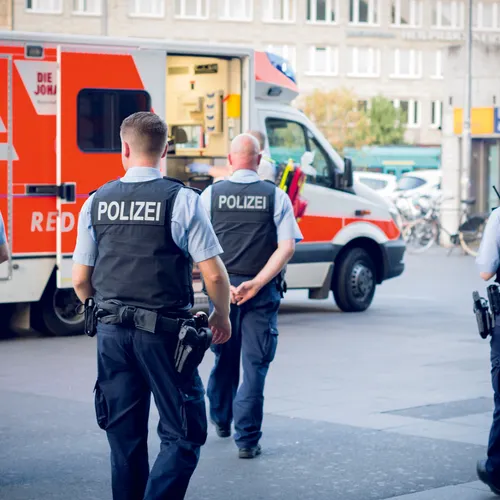
Training Realistic Scenarios
From vehicle stops to hostage situations: all relevant scenarios in a protected environment.
Rare & Critical Situations
Armed attacks, hostage taking, major incidents: situations that rarely occur in service and must be practised for exactly that reason.
Decision-Making Competence
Complex, confusing situations require rapid, proportionate decisions. Simulations train exactly this ability in a targeted way.
Error Culture & Learning Climate
Mistakes are allowed in training. The protected environment enables honest feedback and a reflective culture that benefits everyday operations.
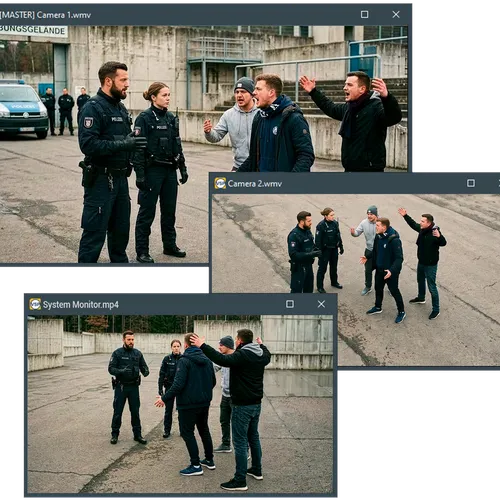

Structured Video Debriefing
The core of the learning process: structured feedback immediately after the scenario.
Self-Confrontation on Video
Participants see their own actions on screen and trace them together with their trainers.
Structured Debriefing Checklists
Individually configurable criteria, matched to the training objectives of each unit, give every debriefing the same structure.
Automatic Highlight Videos
The Mangold Highlight Movie Creator automatically creates instructional videos from marked scenes, for follow-up sessions, continuing professional development or documenting learning progress.
Documentation & Quality Assurance
All recordings, markers and checklists are stored in a structured way, usable for certification evidence and for developing training at unit level.
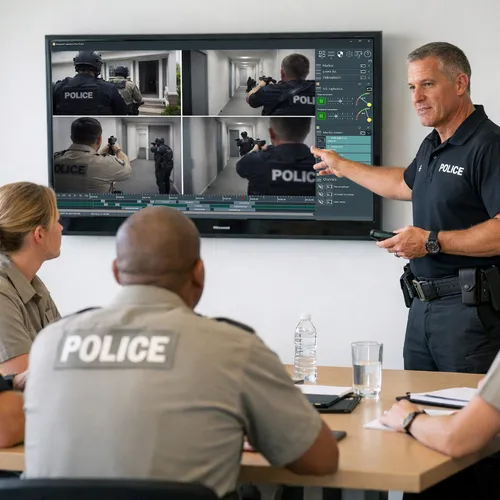
Mobile and Stationary Solutions
From the portable system for training grounds to fully integrated fixed installations at training centres, always on-premise and without cloud.
Portable Video Debriefing System
The mobile solution for flexible training on exercise grounds, in vehicles or at real operational sites.
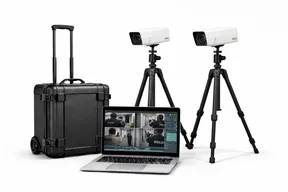

Quick Setup
The complete system is operational within minutes, without external network infrastructure.
Self-Contained Operation
Built-in storage and local processing enable operation anywhere.
Rugged Case Design
All components are housed in sturdy transport cases designed for mobile deployment.
Stationary Simulation Centre
Fully integrated fixed installation for dedicated police simulation centres.
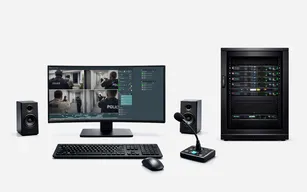
Separate Control Room
Trainers monitor and control training from an adjacent room without influencing the scenario.
Multi-Room Scenarios
Connect multiple rooms for complex scenarios such as hostage situations or search operations.
Realistic Environment
Simulate various operational environments, from residential settings to public spaces.
Use Cases
Video debriefing systems from Mangold International in police training and continuing professional development.
Structured video debriefing as an integral part of basic police operational training.
Regular refresher training with documented learning outcomes and comprehensive records.
Training rare, high-risk scenarios with precise feedback for specialist and tactical units.
Targeted analysis of communication, decision-making and leadership under pressure.
What Your Force Can Rely On
The quotation sets out the full scope, from cameras and microphones to onboarding. There are no hidden costs.
You adapt scenarios, markers and checklists yourself within the system design, without paying for every change request.
Service, updates and extensions are available for years. Operation of the system does not depend on them.
All recordings stay fully on-premise within your organisation. You decide who has access and when data is deleted.
From Memory to What Actually Happened, in Every Operational Training Session
See in a free demo how your unit marks the turning points of a scenario and plays them back in the debriefing with a single click. Or talk to us first about your training sites.
Frequently Asked Questions About Police Simulation Training
Which scenarios can be trained?
Systems from Mangold International document the full spectrum of police training scenarios: vehicle stops, domestic abuse incidents, arrests, armed attacks and hostage situations, major incidents and specialist unit deployments. This is particularly valuable for rare, high-risk situations.
How quickly is the portable system ready to use?
The portable system is designed as a case solution and is operational within minutes. It requires no external network infrastructure and can run self-contained on training grounds, in vehicles or at real operational sites, which makes it well suited to mobile in-situ training.
Who uses the Mangold International AV debriefing system in police training?
The AV debriefing system can be used by police academies and training centres for foundational tactical training, by continuing professional development units for regular refreshers with documented outcomes, by specialist and tactical units for high-risk scenario training, and in leadership programmes analysing communication and decision-making under pressure. The training itself is run by the respective units under their own responsibility. Mangold International provides the recording and debriefing platform.
What is an After Action Review (AAR) in the police training context?
An After Action Review (AAR) is the structured review of a training scenario immediately after it has been run. With the system, the AAR is video-assisted: trainers and participants see their actual actions on screen. This reduces the perception distortions that arise under stress and supports learning.
How is a professionally run police simulation training structured?
A professionally run simulation training follows four phases: (1) preparation and briefing, in which learning objectives are defined; (2) scenario briefing, in which officers receive a tasking as in real service; (3) scenario execution, in which participants act in real time while trainers set markers for the debriefing; (4) debriefing, the systematic video-assisted analysis of all actions taken.
How do we handle officers feeling judged by the camera?
The video is there to examine the action, not to judge the person. The debriefing looks at questions such as the point at which the situation changed and what was said or done immediately before. All recordings stay on-premise within your organisation, and your force decides on access and deletion.
Can the system be adapted to new scenarios and training sites later?
Yes. You adapt scenarios, markers and checklists yourself within the system design, with no extra cost for every change. Additional cameras, rooms or mobile system cases can be added. Service and updates are an offer, not a condition.