

Product · 5 min read
What is Mangold Observation Studio? The Multimodal Research Platform Explained
Discover what Mangold Observation Studio is and how it empowers researchers in UX, automotive, healthcare, and neuromarketing to conduct multimodal, sensor-driven observational studies.
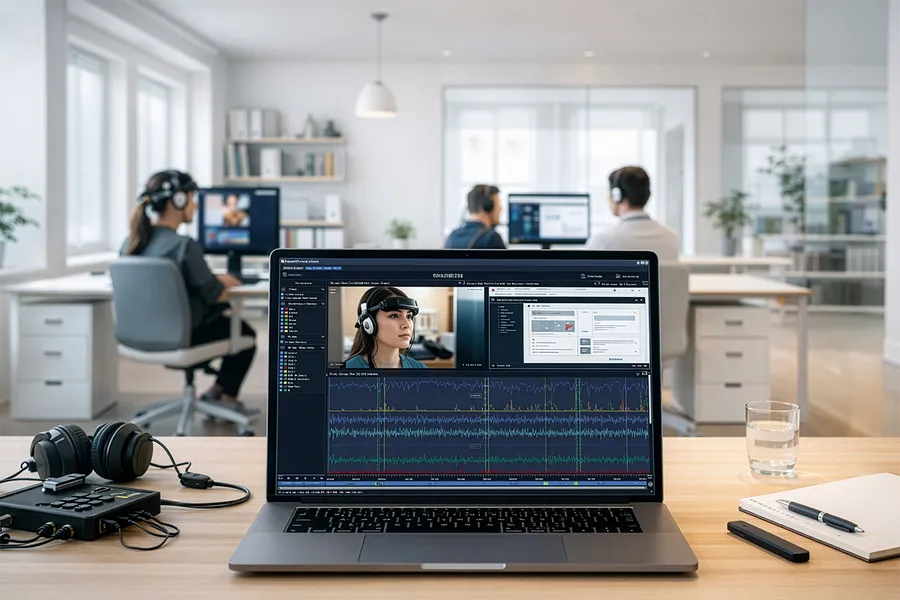
Beyond Isolated Data: How Mangold Observation Studio Transforms Multimodal Research
In modern behavioral and physiological research, single-sensor studies are no longer sufficient. To truly understand complex human interactions-whether a pilot managing cognitive load, a consumer experiencing a product, or a user navigating an interface-researchers must integrate multiple data streams. But how do you synchronize high-frequency EEG waveforms with eye-tracking coordinates, facial expressions, and peripheral biometrics without drowning in technical troubleshooting?
Designed as a central hub for sophisticated, sensor-driven observational studies, Mangold Observation Studio solves the critical engineering challenge of multimodal synchronization. Utilizing the Lab Streaming Layer (LSL) protocol, the software seamlessly integrates data from over 120 supported devices. Its distributed architecture-separating the Participant Station from the Observer Station-ensures that data collection remains unobtrusive for the subject while granting the researcher real-time, network-wide control.
Whether you are evaluating advanced driver-assistance systems (ADAS) in automotive research, analyzing surgical simulations in healthcare, or decoding approach motivation in neuromarketing, the platform provides the necessary scientific rigor. It allows researchers to move beyond merely recording isolated variables to uncovering the dynamic interplay between cognitive states, affective responses, and physical behavior.
Read the full article to explore the core architecture of Mangold Observation Studio, its comprehensive recording capabilities, and how its multimodal approach is advancing research methodologies across five key disciplines.
The landscape of behavioral and physiological research has evolved significantly. Researchers across disciplines-from human factors engineering to consumer neuroscience-are increasingly moving away from isolated data streams toward holistic, multimodal data collection. To answer complex research questions accurately, it is no longer sufficient to merely record a video or track eye movements in isolation; the true value lies in the synchronous integration of these diverse data sources.
This methodological shift requires robust technological infrastructure. Mangold Observation Studio is an advanced, scalable software suite specifically designed to meet this demand. It serves as a central hub for sophisticated, sensor data-driven multimodal observational studies, allowing researchers to capture, synchronize, and analyze behavioral and physiological data in real time.
But what exactly does this platform do, and how is it applied across various scientific domains?
The Core Architecture of Observation Studio
At its foundation, Mangold Observation Studio is built to handle the complexities of modern research environments, where multiple participants may be interacting with various systems simultaneously. The architecture is divided into two primary components to ensure seamless data flow and network-wide control:
- Participant Station: This component is installed on the computer where the participant interacts with the test environment. It collects all local data (such as screen activity, keyboard/mouse input, and webcam video) and transmits it live to the central management software.
- Observer Station: This serves as the control center for the researcher. It displays and records all incoming data streams from one or multiple Participant Stations in real time, providing network-wide control from a single interface.
This distributed architecture ensures that the data collection process remains unobtrusive for the participant while providing the researcher with complete oversight and synchronization capabilities.
Multimodal Data Collection: Capturing the Full Picture
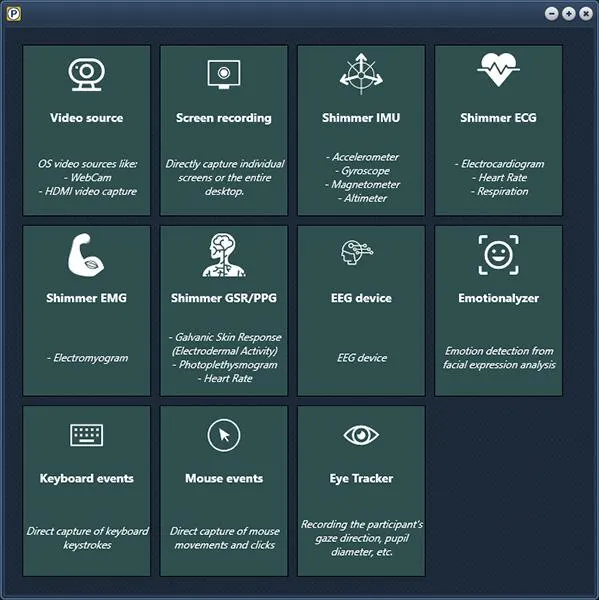
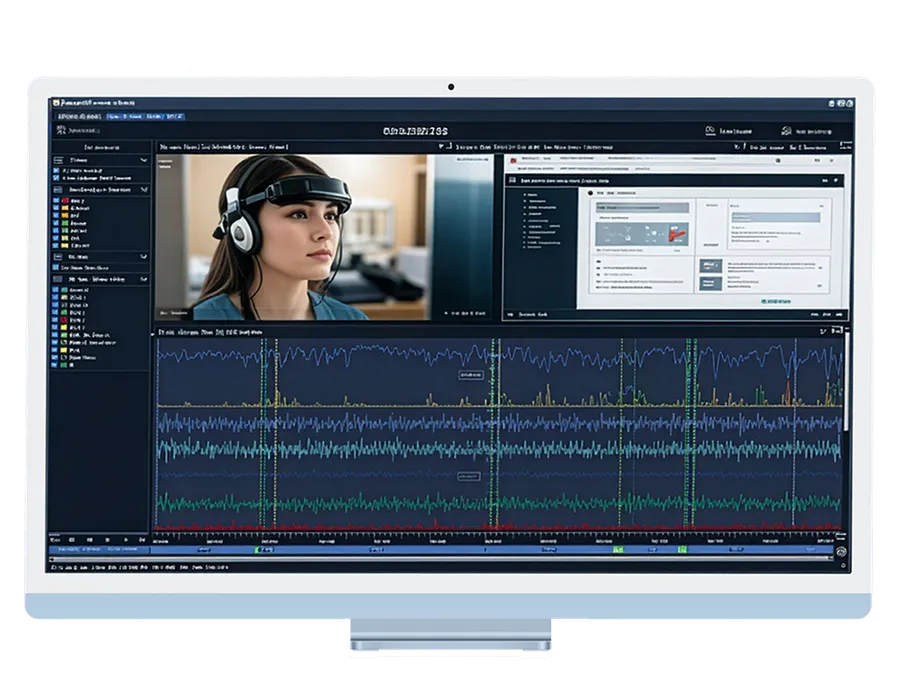
The defining strength of Observation Studio is its capacity for multimodal data integration. Human behavior is multifaceted, and understanding the underlying cognitive and affective states requires measuring multiple physiological correlates simultaneously.
The software seamlessly collects and synchronizes data streams from over 120 supported sensors and devices, primarily utilizing the Lab Streaming Layer (LSL) protocol. This standardized protocol ensures precise temporal synchronization (often down to the millisecond) across highly diverse hardware.
What is the Lab Streaming Layer (LSL)?
LSL is an open-source protocol for the real-time exchange, recording, and synchronization of time-series data across multiple devices. It has become the de facto standard in physiological and neuroscientific research for achieving millisecond-accurate synchronization across heterogeneous hardware.
The platform’s modular design allows researchers to configure the system according to their specific methodological requirements. Key recording capabilities include:
- Behavioral Observation: High-definition webcam recording (capturing facial expressions and verbal feedback), precise screen recording, and detailed tracking of keyboard and mouse interactions.
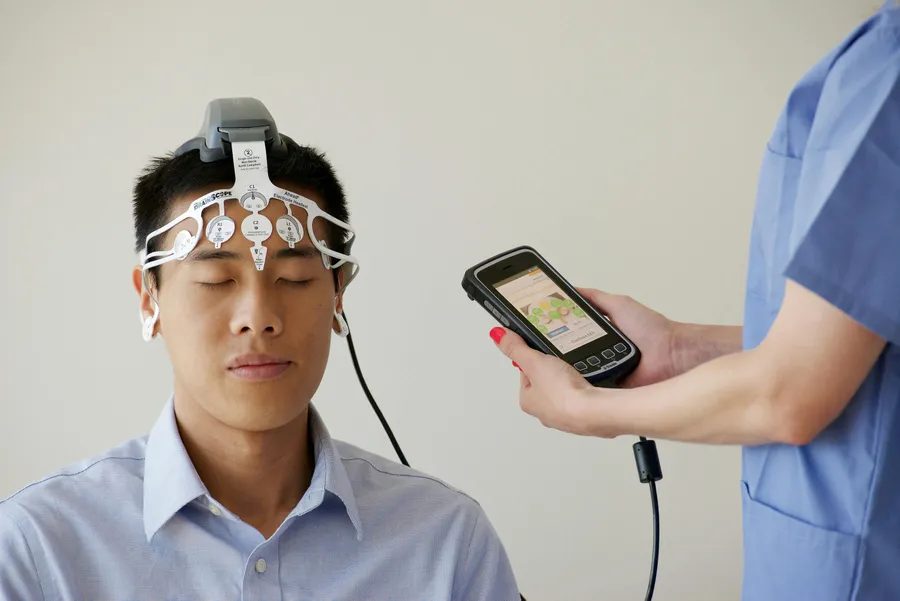
- Neurophysiological Measurements: Integration with high-end EEG systems (such as Brain Products) to monitor cortical activity, as well as fNIRS for mapping cerebral hemodynamics.
- Peripheral Biometrics: Electrodermal Activity (EDA/GSR) to measure sympathetic arousal, ECG for Heart Rate Variability (HRV) analysis, and EMG to evaluate physical stress and muscle activation.
- Visual Attention: Seamless integration of various eye-tracking devices to analyze gaze patterns, fixations, and saccades.
- Advanced Analytics: On-premise, GDPR-compliant AI emotion analysis derived from facial expressions, providing real-time affective classification.
Furthermore, the platform includes a Stimulus Presentation System for the timed presentation of media content and an integrated survey module for collecting subjective participant feedback, ensuring that both objective physiological data and subjective self-reports are housed within the same synchronized timeline.
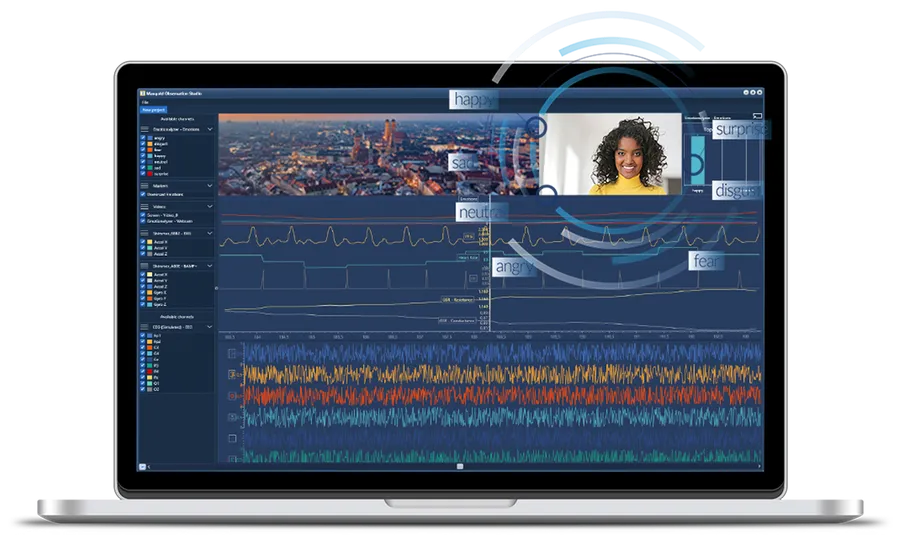
Cross-Disciplinary Application Areas
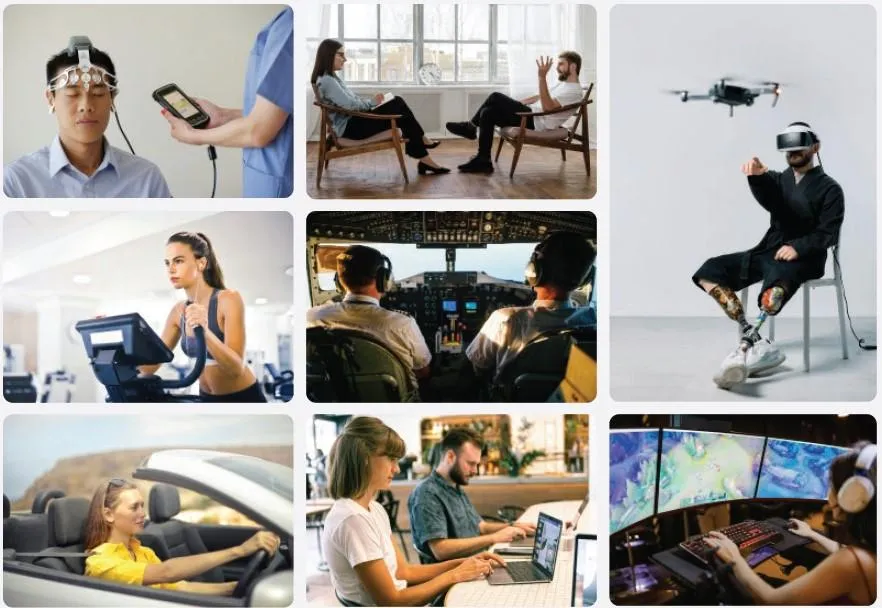
Because human behavior is the central variable in countless fields, the application of Mangold Observation Studio spans a wide array of scientific and industrial domains. A review of current research methodologies reveals several key areas where this multimodal approach is transformative:
1. User Experience (UX) and Usability Studies
In the realm of human-computer interaction, understanding user frustration or intuitive joy requires more than analyzing click-through rates. Observation Studio is utilized to synchronously record touchscreen interactions, eye movements, and facial expressions. This allows UX researchers to pinpoint exactly where a user’s visual attention was focused when a spike in physiological arousal (e.g., EDA) or a negative facial expression occurred, providing actionable insights for interface optimization.

2. Automotive Research and Autonomous Systems
Human Factors Engineering is critical in the automotive sector, particularly with the rise of advanced driver-assistance systems (ADAS) and autonomous vehicles. Researchers use the platform to evaluate infotainment usability, analyze driver fatigue during long-distance journeys, and assess cognitive workload under stress. By combining eye-tracking, heart rate, and EEG data, automotive engineers can design safer, more intuitive vehicle cockpits.
3. Healthcare and Medical Simulation
In medical research and clinical training, precision is paramount. The software is employed to evaluate clinical training programs, analyze surgeon performance during complex simulations, and study the interactions between medical staff and patients. By recording physiological reactions alongside precise movements and eye-tracking data, healthcare professionals can improve both medical equipment ergonomics and patient care protocols.
4. Aerospace and Aviation
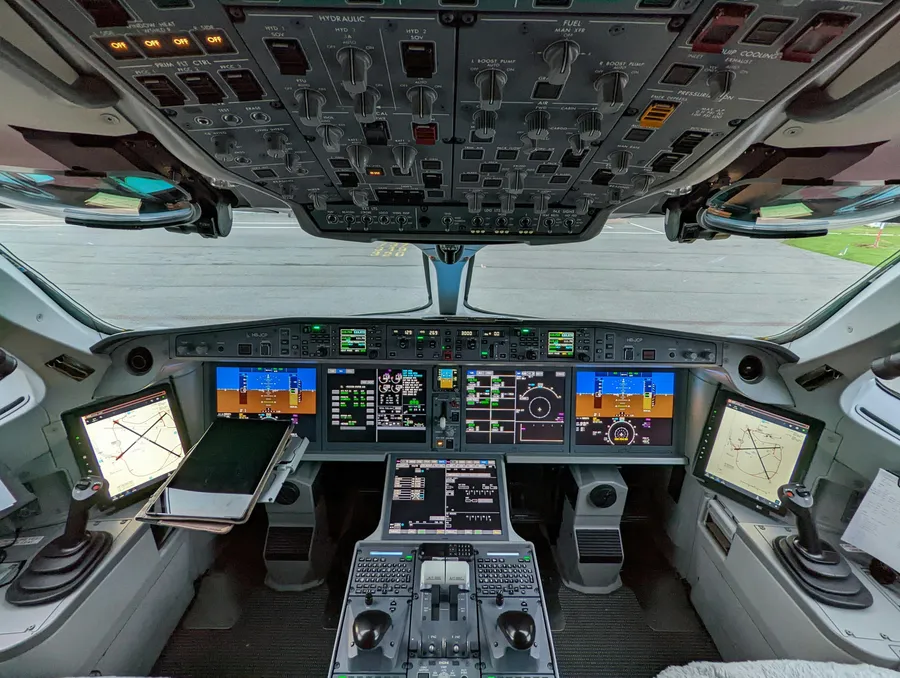
Aviation safety relies heavily on effective human-machine interfaces and situational awareness. In aerospace research, the platform facilitates the evaluation of cockpit designs, the analysis of air traffic controller stress patterns, and the development of pilot training programs by synchronously recording physiological data and physical interactions during flight simulations.
5. Neuromarketing and Consumer Neuroscience
Understanding consumer decision-making requires probing beyond conscious self-reports. Neuromarketing researchers leverage Observation Studio to decode consumer behavior by integrating EEG, eye-tracking, and biometric measurements. This multimodal approach helps identify the neurobiological correlates of approach motivation, allowing brands to design more empathetic and effective product experiences.
Conclusion: The Value of Synchronized Observation
Mangold Observation Studio represents a critical methodological advancement in behavioral and physiological research. By solving the complex engineering challenge of synchronizing disparate, high-frequency data streams-from simple mouse clicks to complex EEG waveforms-it frees researchers to focus on data analysis and interpretation rather than technical troubleshooting.
Whether evaluating the cognitive load of a pilot, the usability of a medical device, or the affective response of a consumer, the platform provides the necessary scientific rigor to transform isolated data points into comprehensive, actionable insights about human behavior.
FAQ - Frequently Asked Questions
What is Mangold Observation Studio?
What is the difference between the Participant Station and the Observer Station?
What physiological signals can Observation Studio record?
What is the Lab Streaming Layer (LSL) and why does it matter?
In which research fields is Mangold Observation Studio used?
Is Observation Studio GDPR-compliant?
Mangold Observation Studio
The advanced software suite for sophisticated sensor data-driven observational studies with comprehensive data collection and analysis capabilities.
