

GDPR-Compliant · On-Premise AI · Multimodal
Mangold Observation Studio: The GDPR-Compliant Platform for Multimodal Research

- GDPR-Compliant On-Premise AI
- 120+ Sensors via LSL
- Eye Tracking + EEG Sync
- Made in Germany
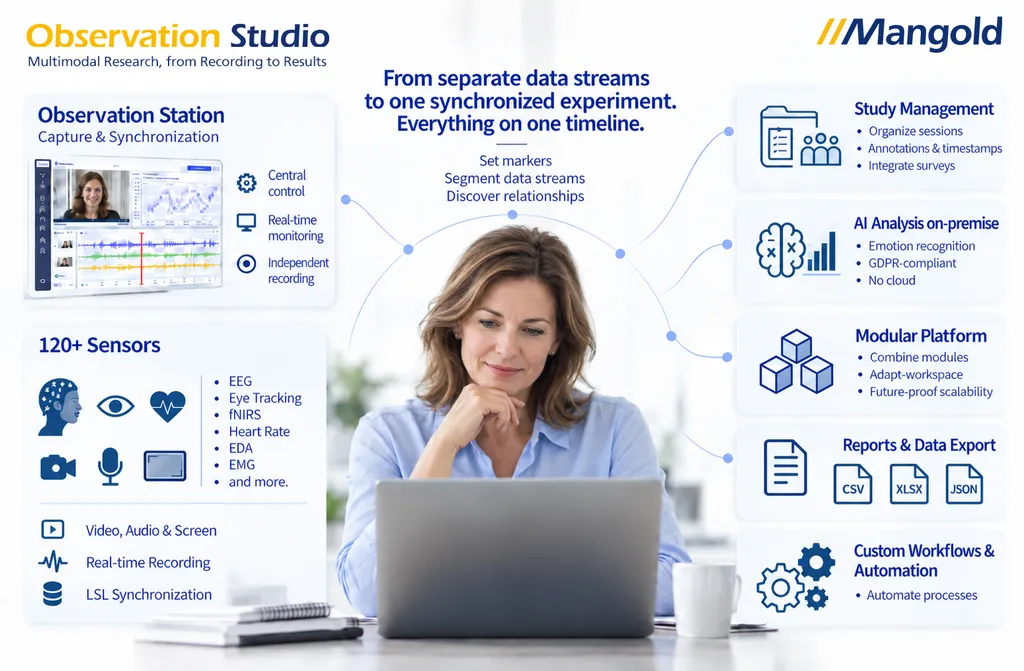

The Challenge at the Screen
Which Moment Triggered the Response?
A typical ad effectiveness test: a participant watches a commercial and comments on her impressions out loud (thinking aloud). Eye tracking shows where she looks, the webcam captures her facial expressions, and a sensor measures skin conductance. The key question: which scene triggered the arousal, and what was she saying and looking at in that exact moment?
To answer it, stimulus, gaze, facial expression, speech and physiology have to line up exactly. If each device runs its own software with its own time base, the merging starts after recording: exporting files, aligning timestamps, correcting offsets. With several participants at once, the effort multiplies.
Then there is data protection: facial video is personal data. If emotion analysis is computed in the cloud, compliance questions quickly arise at European institutions.
One experiment, one timeline: every data stream belongs together from the moment it is recorded.
Why Mangold Observation Studio
You Design the Experiment. We Make Sure Every Data Stream Arrives in Sync.
Mangold Observation Studio builds on more than 35 years of experience in capturing and analyzing audio, video and sensor data in sync. The platform consists of the Observer Station, which records, controls and analyzes, and the Participant Station, which captures all data on each participant’s computer and transmits it for recording.
Proven Technology
Mangold International has developed systems for synchronized data capture since 1991. Researchers at 80 of the world’s top 100 universities work with solutions from Mangold International.
100-Nanosecond Timestamps
All data streams are processed internally with a timestamp accuracy of 100 nanoseconds. The actual capture rate depends on the device used.
On-Premise, No Cloud
Even the AI emotion analysis runs locally. Facial video and sensor data stay within your institution.
Direct Manufacturer Support
Support from the development team, in English and German, with no reseller in between.
Three Steps
How Your Experiment Gets Onto One Timeline
- 1
Define Experiment and Data Sources
Together we define stimulus, procedure and data sources: which sensors, how many participants at once and which analysis you are planning.
- 2
Choose Modules and Set Up
You choose the modules you need. Mangold International sets up the Observer Station and Participant Stations, connects your devices and gets your team up and running.
- 3
Record and Analyze
You run the experiment with the Mangold Experiment Designer, record all data streams in sync and export the data for analysis, including to Mangold INTERACT.
What Mangold Observation Studio Does for Your Research
Less merging, more research: Mangold Observation Studio captures and synchronizes every data stream of an experiment in one platform.
Connect almost any Research Device
Seamlessly collect and synchronize data streams from over 120 supported sensors and devices using the LSL protocol.
Record Multiple Participants
Simultaneously record data from a practically limitless number of participants (within the scope of what is technically feasible).
On-Premise AI Emotion Analysis
Analyze facial expressions automatically with GDPR-compliant AI emotion analysis that runs locally on your hardware.
Control Your Entire Research Network
Centrally manage all devices and optimize network settings through automated protocols from a single interface.
Manage Sessions Effortlessly
Access, organize, and replay all recorded sessions through an intuitive interface with powerful search capabilities.
Integrate Custom Surveys
Use individually configurable questionnaires in Mangold Observation Studio to conduct surveys about your test objects.
Add Real-time Annotations
Mark important moments during recording or review with precise timestamps and detailed annotations.
Navigate Data Efficiently
Jump between key moments instantly using marker-based sequence controls and smart timestamps.
Control Experiments
Create experiments with the Mangold Experiment Designer: timed presentation of stimuli such as websites, images, videos and questionnaires.
Share Data Seamlessly
Exchange research data effortlessly between compatible applications and platforms.
Customize Your Workspace
Arrange windows and visualizations exactly how you need them for optimal data analysis.
Extend Functionality
Connect to external systems and expand capabilities through comprehensive API and SDK support.
Modular Design That Grows With Your Research
Assemble your research environment from modules and extend it as your research question grows.
Modular Configuration
Choose and combine modules to match your exact needs.
Future-proof Scalability
Expand your system effortlessly as your research grows.
API Integration
Connect external tools and build custom solutions via API/SDK.
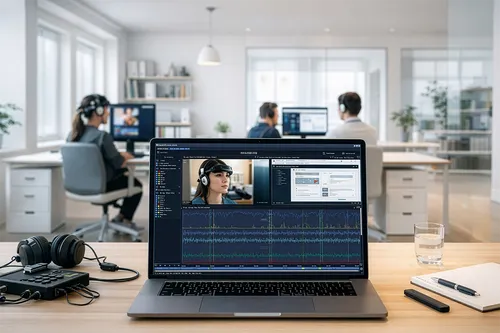
Capture Every Detail.
From Any Source.
Collect and synchronize data from multiple sources to create comprehensive research insights.
Webcam Recording
Capture your users via webcam for facial expression analysis.
AI Emotion Analysis
Calculate emotions via AI analysis from facial expressions.
Screen Recording
Record participant computer screen activity in real-time.
EEG Data
Monitor brain activity with precision EEG measurements.
Eye Tracking
Track eye movements and analyze viewing patterns.
Heart Rate Monitoring
Measure heart rate dynamics including IBI and HRV.
Skin Response
Track arousal levels through skin resistance measurements.
Muscle Activity
Monitor physical stress through EMG measurements.
Survey Integration
Gather participant feedback through integrated surveys.
Speech Analysis
Convert conversations to text using AI transcription.
Data Export
Export your research data in multiple formats.
Additional Sensors
Connect fNIRS, motion tracking, and marker systems.
Scale Your Research with a Powerful Architecture
Scalable and future-proof architecture built to grow with your needs.
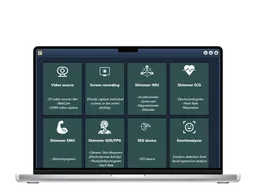
Participant Station
Captures all data on each participant’s computer and transmits it live to the Observer Station for recording.
Multi-user support
Run multiple participant stations simultaneously in the network.
Real-time data streaming
Seamless live data transmission to central management.
Scalable collection
Collect data from multiple user-specific devices per participant.
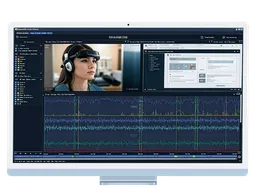
Observer Station
The core software: displays all data streams in real time, controls the network, records and analyzes.
Network-wide control
Centrally manage all participant devices from a single interface.
Real-time monitoring
Display and record all data streams simultaneously in real-time.
Independent recording
Record separate data streams from multiple participants simultaneously or independently as needed.
Extensive Sensor Support
Support for over 120 sensors and devices via the LSL protocol.*
Electrophysiology, EEG, fNIRS, Eye Tracking, Human-Machine-Interfaces, Motion Trackers, Stimulus Systems and more...
ABM, AMTI, ANT, Artinis, BioSemi, bitalino, Bitbrain, Bittium NeurOne, Blackrock Cerebus, Brain Products, BrainVision, CGX, Cognionics, Cortivision, EB Neuro, EGI AmpServer, Emotiv, Enobio, Eye Tribe, EyeLogic, EyeTechDS, Foc.us, g.Tec, GowerLabs, HTC Vive Eye, mBrainTrain, Mentalab Explore, Microsoft Kinect, MindWare, NaturalPoint, Neuracle NeuroHub, NeuroBehavioralSystems, neuroelectrics, Neuroscan, Neurosity Notion, NIRx, OpenBCI, OpenVR, PhaseSpace, Pupil-Labs, Qualisys, Shimmer, SMI, Soterix, SR Research, Starcat, Tobii, Wearable Sensing, Xsens, Zephyr...
* Compatibility must be checked on a case-by-case basis due to ongoing product changes.
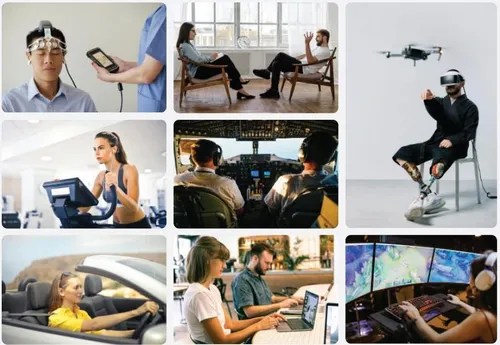
Application Areas
One platform for screen-based experiments, from advertising research to neuroscience.
Measure attention and emotional responses to ads, websites and digital content.
Collect detailed insights into user interactions and emotional responses.
Assess product effectiveness and ease of use through objective measurements.
Study brain activity and neural responses with precise sensor integration.
Analyze behavioral patterns and cognitive responses in controlled environments.
Evaluate and optimize interfaces between humans and technological systems.
Study group dynamics and collaborative behaviors in real-time.
Analyze human factors and physical interactions in various environments.
Monitor athletic performance and movement patterns with precision.
Track recovery progress and treatment effectiveness in clinical settings.
Study physiological responses and medical interventions with accuracy.
Evaluate player engagement and gameplay experiences in detail.
Our Commitments
You choose the modules your study needs and receive a quote covering the full scope.
The raw data export contains all measures, devices and participants in one table. Recordings can also be exported to Mangold INTERACT.
All data, including the emotion analysis, is processed GDPR-compliant on your own hardware. No transfer to external providers, no Schrems II risks.
Additional Participant Stations, sensors and modules can be added at any time as your research question grows.
The Mangold Observation Studio Software
Pick and choose modules that best fit your research current needs. Each module offers advanced features and capabilities.
System Components - Always Included
Mangold Observation Studio Software (the core application)
This central recording software captures video, audio, and sensor input from every connected participant station on your network. This base package includes one recording license for a single participant station. Additional licenses for the simultaneous recording of multiple participants can be purchased at any time.
Participant Station Software (per test computer)
The Participant Station software sends all data captured on a computer to the Mangold Observation Studio recording station on the network. The Participant Station software can be installed on almost any computer that meets the requirements for the selected modules.
Key Advantages:
Time-synced live viewing and recording of audio, video, and marker information, with easy RAW data export for one or multiple participants simultaneously.
Ideal Applications:
This system can be used to analyze participants’ reactions in relation to their interactions with the study subject (e.g., websites, applications, chats, videos, computer tasks, or stimuli from presentation systems such as E-Prime, SuperLab, etc.). Ideal for Scientific Research and Usability, User Experience and Marketing Studies.
Select Modules
From Separate Data Streams to One Synchronized Experiment
See in a free demo how Mangold Observation Studio brings your data sources onto one timeline. Or configure your system in the module selector first.
Frequently Asked Questions
What is Mangold Observation Studio?
Mangold Observation Studio is a multimodal research platform for screen-based experiments. It captures stimulus, screen, webcam and sensor data in sync, supports more than 120 devices via the Lab Streaming Layer (LSL) protocol, including eye trackers, EEG, ECG, fNIRS, GSR and EMG, and offers AI emotion analysis from facial expressions that runs on-premise.
How does Mangold Observation Studio differ from other multimodal research platforms?
The key difference is data processing: Mangold Observation Studio runs entirely on-premise on your own hardware, including AI emotion analysis. For GDPR-compliant research with sensitive participant data, that is a structurally sound foundation. In addition, recordings can be exported to Mangold INTERACT and coded there.
Which sensors are supported?
More than 120 devices via the LSL protocol, including Brain Products EEG, Tobii eye trackers, Pupil Labs, BioSemi, NIRx fNIRS, Shimmer, ANT Neuro, EGI, BrainVision, Cognionics, Emotiv, Bittium NeurOne and many more. In principle, any LSL device can be connected; integration is checked case by case.
Does AI emotion analysis work offline?
Yes. AI-based emotion analysis from facial expressions runs fully on-premise and in real time on your own hardware, with no cloud connection and no transmission of webcam data to external providers. It is therefore GDPR-compliant.
Can I study multiple participants simultaneously?
Yes. Mangold Observation Studio supports multi-participant studies with an essentially unlimited number of Participant Stations (within technical feasibility). Data from all participants is captured centrally and in sync, for example for team research, collaborative studies or research on learning behavior.
How do I integrate custom stimuli and surveys?
With the Mangold Experiment Designer, you define stimulus presentation and experiment flow, from a single website to randomized image and video sequences. An integrated survey module enables custom questionnaires whose data is directly linked with sensor and observational data.
Can Mangold Observation Studio be combined with other Mangold tools?
Yes. Recorded data can be exported to Mangold INTERACT for further behavioral coding and analysis. In addition, a comprehensive raw data export brings together all measures, devices and participants in one table.
In which research fields is Mangold Observation Studio used?
Mangold Observation Studio is used in market research and neuromarketing, user experience, usability testing, human-machine interaction, neuroscience, psychology, ergonomics, sports science, games research, team research, rehabilitation and biomedicine.
How are the data streams synchronized?
Each Participant Station captures the data of its computer, including webcam, screen and LSL sensors, and transmits it to the Observer Station. There, all data streams are brought onto one shared timeline, processed internally with a timestamp accuracy of 100 nanoseconds. The actual capture rate depends on the device used.
Can thinking aloud be combined with eye tracking and physiology?
Yes. The webcam captures participants’ speech and facial expressions in sync with stimulus, gaze data and sensors. That lets you analyze concurrent thinking aloud right next to gaze path and arousal. For retrospective thinking aloud, the recording can be reviewed together with the participant afterwards.