

Know-How · 7 min read
Video Debriefing in EMS: Why Lasting Learning Needs It
Realistic scenarios alone don't make learning stick. How structured video debriefing enables lasting learning in EMS, explained with the evidence.
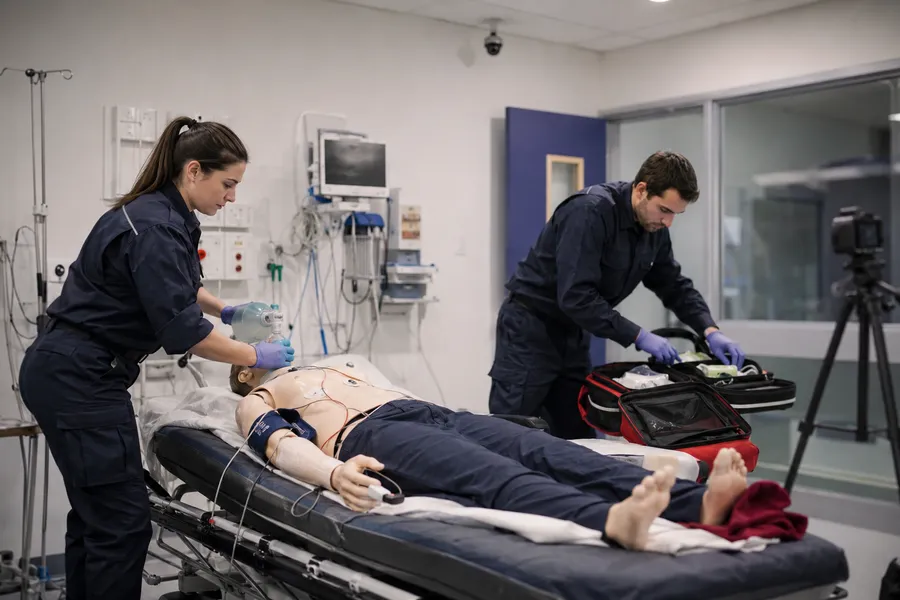
Simulation is now standard practice in the emergency medical services, but realistic scenarios on their own don't make learning stick. The real learning happens in the structured reflection that follows, and it is exactly this reflection that video debriefing makes traceable, fair and concrete. Drawing on recent research from German emergency medicine and from healthcare simulation, this article explains why a one-off course rarely suffices, what makes the post-scenario debrief effective, and what part the technology plays.
Simulation is now standard practice in the emergency medical services, but realistic scenarios on their own don’t make learning stick. The real learning happens in the structured reflection that follows, and it is exactly this reflection that video debriefing makes traceable, fair and concrete. Drawing on recent research from German emergency medicine and from healthcare simulation, this article explains why a one-off course rarely suffices, what makes the post-scenario debrief effective, and what part the technology plays.
For a general introduction to the method, the definition, debriefing models such as PEARLS and GAS, and the technical foundations, see Video Debriefing in Simulation: How AV Systems Accelerate the Learning Curve. This article tackles the question behind it: why does a team learn more durably through video debriefing?
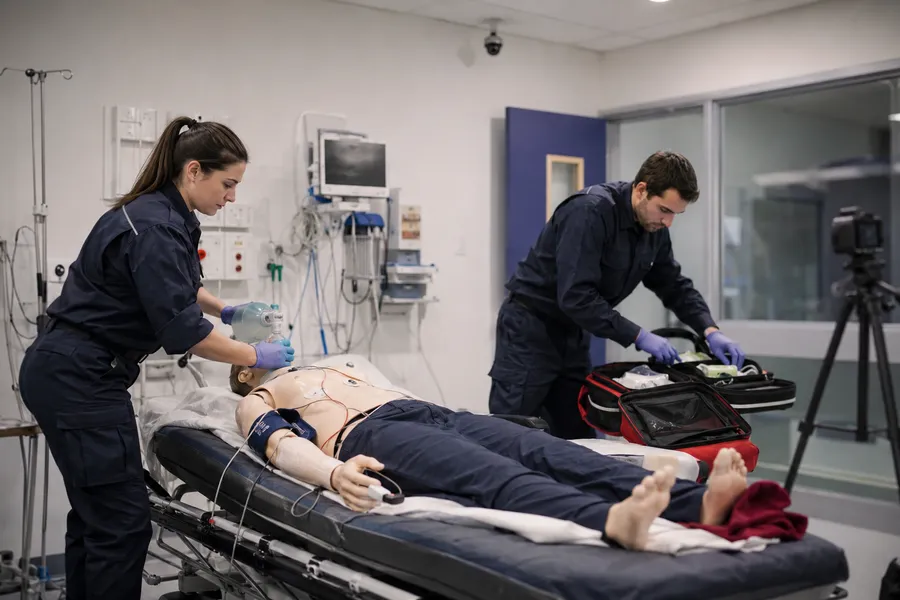
Why Isn’t the Scenario Enough on Its Own?
Pre-hospital emergency care is a high-risk environment: stress, time pressure, incomplete information. In this setting, non-technical skills (task management, teamwork, situational awareness, decision-making) often determine the quality of care just as much as the clinical procedures do. And they can’t be learned from a textbook; they have to be experienced. That is what simulation is for.
But running through a scenario does not change behavior automatically. Studies show that in real emergencies up to roughly a quarter of the procedures that should be carried out are missed, even by experienced teams. Experience plus a scenario, in other words, does not yet add up to complete, high-quality care. What is missing is the structured review that turns the experience into an insight.
What the Evidence From EMS Shows
A randomized study from Hannover and the German Red Cross examined just how little a one-off course achieves on its own (Eismann et al., 2026). It compared whether a one-day course focused on non-technical skills improved simulated patient care more than a technically oriented course. The result was sobering and instructive in equal measure:
- Six months later, there was no significant difference between the two groups in their care performance.
- More than half the teams failed to complete 75% of the required procedures.
- Structured non-technical tools, such as brief, orderly team time-outs, were barely used during the scenario.
The authors draw two conclusions from this that are central to debriefing practice. First: a single intervention is simply too short to change behavior durably under real conditions; according to the literature cited, changes in the medical environment take years, not hours. Second, and this is the constructive part: the data from the scenarios can be used by the teams for self-reflection. Notably, the scenario videos in this study were systematically analyzed with the video-analysis software Mangold INTERACT .
The message is not that simulation or non-technical training are ineffective, quite the opposite. It is this: the lasting effect comes not from the individual scenario but from repeated, structured reflection on it. And that is precisely where video debriefing comes in.
How Video Debriefing Enables Lasting Learning
Video debriefing replaces memory with observation. Under stress, perception narrows, and in hindsight the outcome colors how we remember the sequence of events. The video does not share that distortion: it shows what happened, in the right order. With that, the debrief shifts from “who is right?” to “what actually happened?”, and only on this shared factual basis is feedback taken on board rather than fended off.
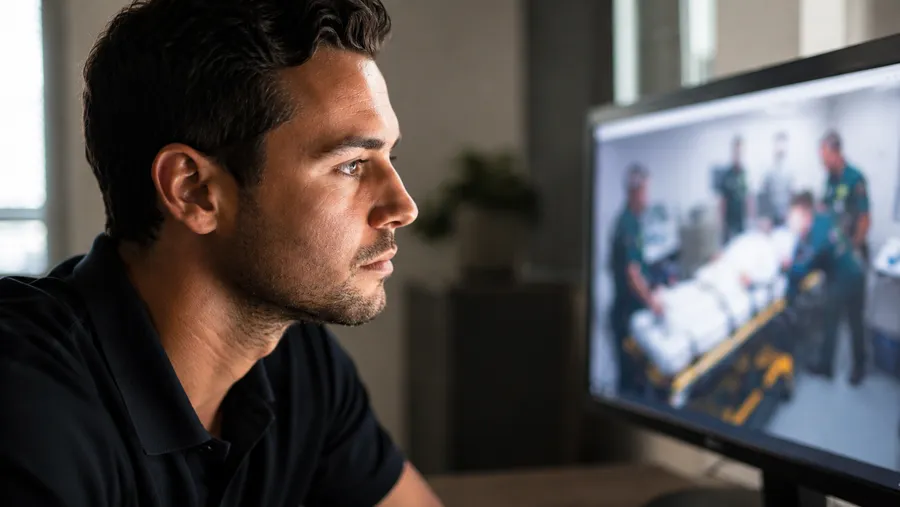
For lasting learning, three points are decisive:
- The gap between self-perception and actual performance becomes visible. This reconciliation is the real engine of learning, and only the video can hold it up without bias.
- Reflection goes deeper (double-loop learning). It is not just about correcting an action, but about examining the assumptions behind it: what picture of the situation did I have, and why was it incomplete? The video supplies the concrete moment at which those assumptions can be discussed.
- Key moments become discussable again and again. A one-off experience turns into a point of reflection that can be revisited across several training cycles, the answer to the “one course isn’t enough” problem.
The attitude behind it is non-negotiable: the video serves learning, not control. The moment the recording is experienced as evidence of mistakes, the safe learning space collapses. The guiding question is not “here’s your mistake,” but “what do we see here, how do we judge the situation, and what do we learn from it?”
Making Teamwork Visible and Measurable
Much of what decides the outcome in EMS is teamwork: communication, coordination, saying a suspected diagnosis out loud. These behaviors are observable, and therefore capturable. A methods article on measuring teamwork in healthcare simulation (Schmutz & Antino, 2026) describes how systematic behavioral observation and behaviorally anchored rating scales (established instruments such as ANTS or NOTECHS) make team behavior tangible from video.
The finding that matters for debriefing: measuring teamwork makes training needs visible and strengthens the quality of the debrief, because objective reference points take the place of mere impressions. The prerequisite, however, is measurement quality, clear behavioral definitions and reliable, calibrated observation. How that reliability can be checked is covered in our article on inter-rater reliability and Cohen’s kappa. Here too, Mangold INTERACT is named in the literature as one of the established tools for systematic behavioral observation in healthcare simulation (Schmutz & Antino, 2026).
A practical caveat: systematically analyzing team behavior is a separate layer, relevant above all to research and quality analysis. For everyday training, the debrief takes center stage, but the analysis layer shows that the same mindset carries through: observe objectively rather than recall subjectively.
What This Means for Everyday Training
For video debriefing to work durably, four things have to come together:
- A safe learning space. Psychological safety (the shared belief that you may raise concerns and mistakes) is the precondition for reflection to happen at all. It begins with familiarization: introducing participants early to the room, the procedure and the use of cameras, and openly addressing any reservations about being recorded.
- Structured facilitation. Don’t play the whole tape; select a few telling key moments and work with them. Trainers facilitate, observe and structure; the video is the tool, not the teacher.
- Repetition rather than a one-off. The evidence is clear: durable learning develops across several regular cycles, not in a single session.
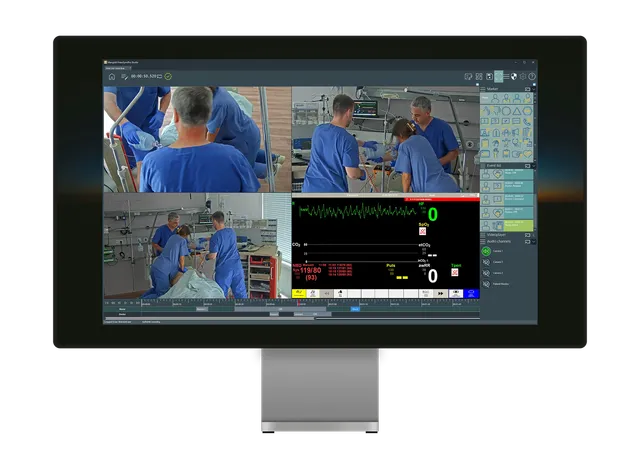
- Technology that stays in the background. Several synchronized camera angles together with audio and simulator data, the ability to mark key moments while the scenario is running, and fast access to them in the debrief, so that attention stays on the training and not on the controls. A system such as Mangold VideoSyncPro is built for exactly this: synchronized multi-camera recording, live markers and fast scene access, including as a mobile in-situ solution.
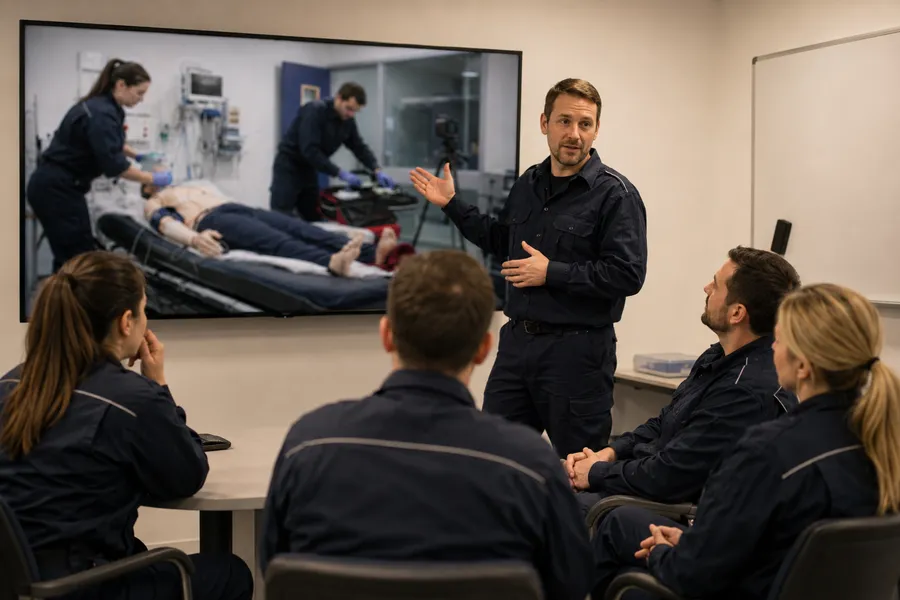
Mangold International supplies the infrastructure for this debrief, as a manufacturer, with local, cloud-free recording and direct support. The pedagogical work is done by the training institutions themselves; the technology makes sure they can focus on it.
Key Takeaways
- The learning value of a simulation lies not in the scenario but in the structured reflection that follows.
- A one-off course barely changes behavior durably; lasting learning develops through repeated, structured reflection (Eismann et al., 2026).
- Video debriefing replaces memory with observation, makes the comparison of self-perception and actual performance possible, and supports double-loop learning.
- Teamwork is observable and measurable; making it visible strengthens the quality of the debrief (Schmutz & Antino, 2026).
- The method works through a safe learning space, facilitation, repetition and technology that stays in the background.
FAQ - Frequently Asked Questions
Why isn't a single simulation course enough in EMS?
What does video add over a purely verbal debrief?
Is the video used to assess staff?
Can teamwork be captured objectively?
What does a video debriefing system need to do?
Video Debriefing in Medical Simulation
Explore Mangold video debriefing systems used in medical simulation training - supporting healthcare educators with structured, evidence-based feedback.
Sources
- Eismann H, Halser J, Robert M, Flentje M. (2026). A randomised study on the comparative performance of German paramedics after technical versus non-technical skills training. GMS Journal for Medical Education, 43(5), Doc64. DOI: 10.3205/zma001858 (Open Access).
- Schmutz JB, Antino M. (2026). How to… measure teamwork in healthcare simulation. Journal of Healthcare Simulation. DOI: 10.54531/QMJP1895 (Open Access).
- Rueda-Medina B, et al. (2024). Effectiveness of video-assisted debriefing versus oral debriefing in simulated clinical sessions: a randomised controlled trial. Clinical Simulation in Nursing.
- Levett-Jones T, Lapkin S. (2014). A systematic review of the effectiveness of simulation debriefing in health professional education. Nurse Education Today.
Further Reading
- Fundamentals and debriefing models (PEARLS, GAS), technology and ROI: Video Debriefing in Simulation: How AV Systems Accelerate the Learning Curve
- Solution for EMS simulation: Rescue-worker simulation training
- Recording and debriefing system: Mangold VideoSyncPro